Hoarding Disorder and Attachment to Objects: Self-Test, Causes, and How to Help


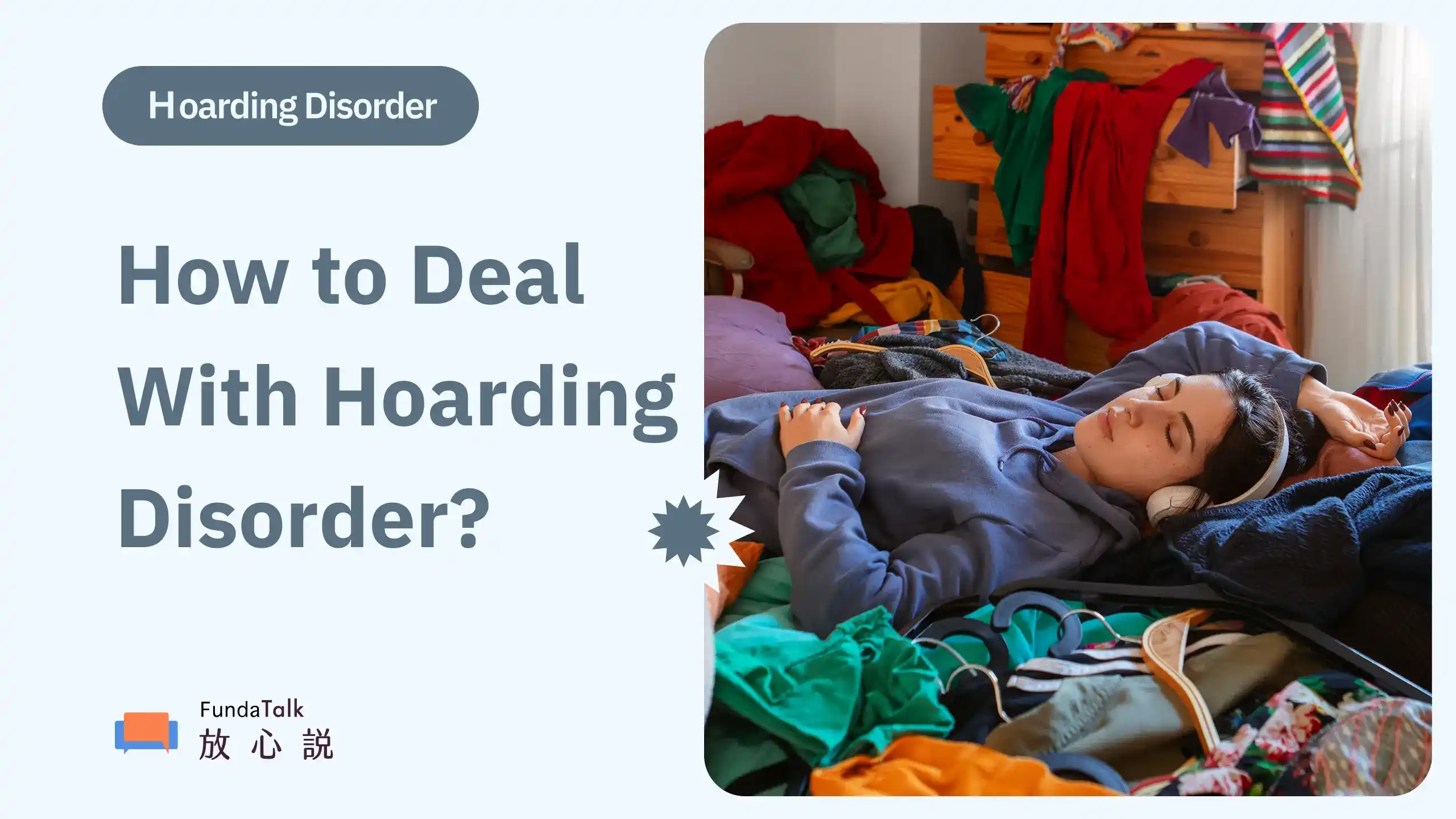
Su-Jen (not her real name), 55, stood at the door of her parents' home and couldn't bring herself to push it open.
Inside: stacks of expired newspapers, cardboard boxes, empty bottles and jars. When she tried to clear out a pile of magazines from ten years ago, her mother's reaction was close to a breakdown, as if Su-Jen were cutting off a part of her body.
For someone with hoarding disorder, the objects they keep are an extension of their sense of self and a source of psychological security.
This article covers:
- What is hoarding disorder?
- Why does hoarding disorder develop?
- Does my family member have hoarding disorder? A self-screening tool
- What is going through a hoarder's mind?
- Why forced cleanouts can cause serious psychological trauma
- What to do when you notice hoarding tendencies in a family member
What treatment options are available for hoarding disorder?

What Is Hoarding Disorder?
Hoarding disorder, also known as compulsive hoarding, was officially recognized as a standalone psychiatric condition in the DSM-5 in 2013, classified under Obsessive-Compulsive and Related Disorders [3].
Its core feature is a persistent difficulty discarding possessions, regardless of their actual value, to a degree that causes severe clutter in living spaces and significantly impairs daily functioning.
Why Does Hoarding Disorder Develop?
Hoarding disorder doesn't have a single cause. Clinically, three contributing factors are most commonly observed: psychological compensation, anxiety, and difficulty making decisions.
Psychological compensation: When the emotional environment in childhood is chronically unstable, such as a parent with a drinking problem or a long-absent caregiver, some people develop a pattern in adulthood of soothing themselves through ownership and accumulation of objects.
Anxiety: People with hoarding disorder experience a brief sense of relief when they acquire an object, but when it comes time to sort through or discard things, anxiety rises sharply. When these two opposing feelings alternate repeatedly, the behavior becomes very difficult to interrupt.
Difficulty making decisions: Many people who hoard struggle to decide what to do with their possessions. To avoid making the wrong call, they default to keeping things. Over time, this gradually compounds into a state that feels impossible to manage.
Is loving to stock up, owning a lot of stuff, or shopping a lot the same as hoarding disorder?
Clinically, there are a few clear distinctions between hoarding disorder and simply owning a lot or buying frequently.
The first is functional use of space. In hoarding disorder, the level of clutter renders primary living areas, the bedroom, kitchen, and living room, unable to be used for their intended purpose. It goes beyond just looking messy.
The second is the scope of difficulty discarding. People with hoarding disorder struggle to let go of almost anything, including flyers or broken items. Collectors, by contrast, typically only find it difficult to part with objects in a specific category.
The third is impact on daily life. Hoarding disorder causes noticeable disruption to the daily life, work, health, or relationships of the person or their family members.
One additional note: compulsive shopping followed by discarding or giving items away is clinically closer to an impulse control or emotional regulation issue, and operates on a different core mechanism than hoarding disorder.
Does My Family Member Have Hoarding Disorder?
The following is a simplified self-screening tool adapted from the Hoarding Rating Scale-Interview (HRS-I), published in Psychiatry Research [2].
Rate yourself or your family member on each of the following five questions based on what you've actually observed over a period of time.
Scoring: 0–8 points per question 0 = Not at all / No difficulty whatsoever; 8 = Extremely severe / Extremely difficult
To what degree does the accumulation of objects in the home make it difficult to use living spaces as intended (e.g., living room, kitchen, bedroom)? (Score: ______)
How difficult is it to discard, recycle, sell, or give away ordinary objects that most people would have no trouble letting go of? (Score: ______)
Do you currently find it difficult to resist the urge to collect free items, or to purchase items beyond what you actually need, can use, or can afford? (Score: ______)
To what degree do you experience emotional distress, such as anxiety or sadness, as a result of clutter buildup, difficulty discarding, or excessive acquiring? (Score: ______)
To what degree have the hoarding behaviors described above impaired your daily functioning, work or school performance, social life, or family relationships? (Score: ______)
How to Interpret Your Score
Add up the scores from all five questions. If any of the following apply, seeking support from a psychiatrist or psychologist is recommended:
- Total score exceeds 14
- Question 2 (difficulty discarding) scores 4 or above
Question 1 (space use), Question 4 (emotional distress), or Question 5 (impact on daily life) scores 3 or above
What Is Going Through a Hoarder's Mind?
People with hoarding disorder often hear thoughts like these running through their heads: "What if I need it later?" "I know I'll regret throwing this away." "This represents an important memory or relationship." "I'll never find another one exactly like it." "I have no right to be wasteful." "When in doubt, it's safer to keep it."
For them, an object disappearing feels like the memory attached to it disappears too.
Even when something looks to everyone else like an old shoe or a broken piece of ceramic, the person with hoarding disorder still feels a strong need to keep it. Discarding it triggers real distress and anxiety, because that object corresponds to a specific experience or relationship. This is also why the logic of decluttering, the "if it doesn't spark joy, let it go" approach, almost never translates directly to someone with hoarding disorder.
Hoarding disorder is also frequently accompanied by loneliness and self-rejection. A home filled with clutter can sometimes function as an unconscious form of self-punishment, as if to say: "I don't deserve to live well." Clinically, hoarding disorder often co-occurs with chronic depression, low self-esteem, and a history of trauma.
Why Forced Cleanouts Can Cause Serious Psychological Trauma
For someone with hoarding disorder, almost every object is an extension of their sense of self.
Even if family members see the accumulated items as junk, to the person living with the disorder, those objects are part of their life. Forcing a cleanout often triggers feelings of "you don't respect me" or "you're invalidating who I am," causing the person to shut family members out entirely. In some cases, it can produce a reaction similar to acute stress disorder, worsening the person's symptoms. For this reason, forced decluttering is not an appropriate approach for hoarding disorder.
What to Do When You Notice Hoarding Tendencies in a Family Member
Faced with a home overwhelmed by clutter, it's easy for family members to feel angry, helpless, and exhausted, but those reactions tend to make the person with hoarding disorder close off further. Instead, the following steps are recommended.
Prioritize safety first: Use safety as the entry point for conversation: discuss clearing at least a one-meter-wide pathway through the entryway, hallways, kitchen, and areas near the stove. This is the minimum standard for emergency responders to be able to enter the home if needed, and it's the most concrete, hardest-to-argue-with starting point for a conversation with a family member.
Offer alternatives: Rather than discarding everything, suggest moving a meaningful piece of furniture to storage, photographing sentimental items, or keeping a representative selection. Give options rather than ultimatums.
Give them a sense of control over their belongings: Try asking: "For safety reasons, if we absolutely had to clear one corner, which area do you think you'd be most okay with?" Giving the person some sense of agency typically makes them more willing to budge.
Watch your language: Avoid words that carry strong subjective judgment, such as "garbage," "junk," or "filthy." Opt for neutral descriptions instead: "These things seem really important to you" or "You've collected a lot of things over the years." The goal is for the person to feel understood and accepted, not judged.
Seek professional support: With the person's agreement, consider finding a psychologist or psychiatrist who has experience working with hoarding disorder and OCD to provide guidance.
Is Hoarding Disorder Treatable?
When a family member has hoarding disorder, the primary treatment approach is typically Cognitive Behavioral Therapy (CBT) specifically adapted for hoarding. Key treatment goals usually include reducing excessive attachment to objects, improving decision-making and organizational skills, building tolerance for the anxiety that comes with discarding, and adjusting family dynamics and support patterns.
Closing Thoughts
Hoarding disorder is an expression of past trauma or existential anxiety. When we're willing to shift our focus from seeing the clutter in the room to seeing the vulnerable person behind the clutter, there's a real chance of finding warmth and connection again, even in the middle of the mess.
If you suspect you may be struggling with hoarding disorder, or want to learn how to support a family member who is, you can book an online consultation with FundaTalk. Our psychiatrists provide professional assessments to help you or your loved one gradually work toward a more stable and manageable state.
Author: Psychologist Guan-Ru Chen

Further Reading
Reference
- Howard, J. (2022). Clutter: An untidy history. Belt Publishing.
- Tolin, D. F., Frost, R. O., & Steketee, G. (2010). A brief interview for assessing compulsive hoarding: The Hoarding Rating Scale-Interview. Psychiatry Research, 178(1), 147–152. https://doi.org/10.1016/j.psychres.2009.05.001
- American Psychiatric Association. Diagnostic and Statistical Manual of Mental Disorders, Fifth Edition (DSM-5). 2013.
More Articles
 )
) )
) )
)