The Three Challenges of Living Abroad No One Warns You About: Relationships, Belonging, and Bureaucracy


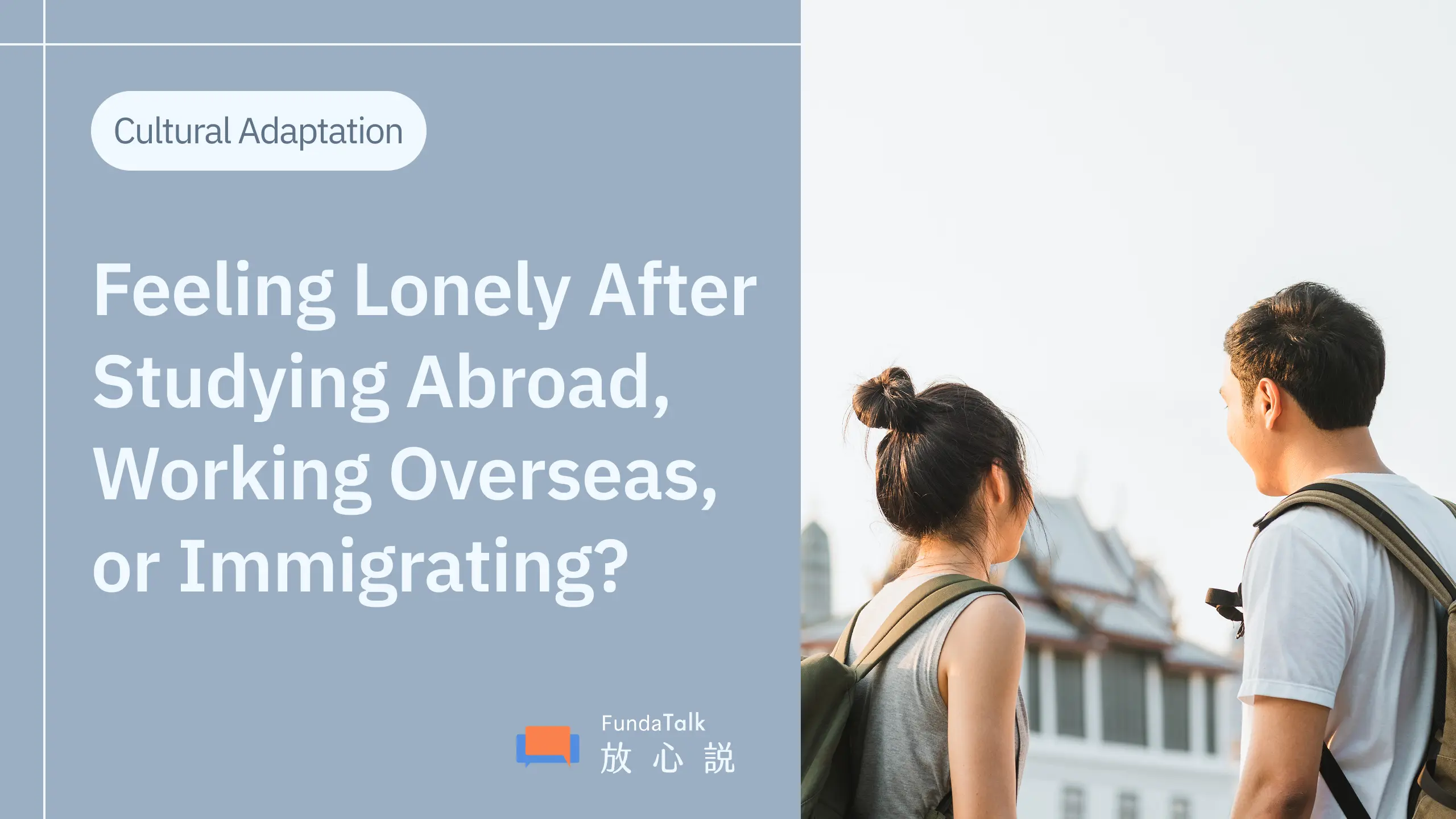
Through online counseling, I've had the chance to support a lot of people living abroad on their own, whether for school, work, or as immigrants.
Across these conversations, I keep noticing the same kinds of stress showing up again and again, usually falling into three areas: feeling disconnected from others, a shaky sense of belonging, and the struggle to adjust to a new culture and its systems.
These three challenges aren't about anyone's personal shortcomings. They're just part of what living abroad looks like, and honestly, this is what we usually call culture shock at its most real and immediate.

1. The Small, Everyday Disconnection
One of the first things people have to get used to when they move abroad is the rhythm of how people connect with each other.
Back home, social support tends to come easily. You've got your regular group of classmates, neighbors you've known for years, and family or friends who can show up with one phone call. Life feels socially “thick.”
But in a lot of bigger countries, like the US or in Europe, people tend to live more independently. Even if everyone's friendly, that doesn't mean closeness happens fast. Building real, lasting connections usually takes more effort and more time than people expect.
There's also something easy to overlook, which is how different the built-in opportunities for connection are. A lot of universities abroad don't have fixed class groups. You might have a totally different set of classmates every class, and everyone goes their separate ways afterward. So even if you're surrounded by people all day, that doesn't always translate into relationships that actually stick.
On top of that, in places further north, winters mean a lot less daylight, which can throw off your body's natural rhythm. Less sunlight can mess with the hormones that regulate your mood, and for some people, this can turn into something called Seasonal Affective Disorder (SAD), basically depression tied to the time of year.
In my work, I often hear people blame themselves for this: "Maybe I'm just not outgoing enough," "Maybe I've lost the ability to make friends," "I should be trying harder." But a lot of the time, it's simply that their environment is offering fewer chances to connect, and that wears down the emotional reserves they need to feel stable.
2. Belonging That Comes and Goes
When you don't have your usual support system around, your friend group abroad ends up carrying a lot more weight than just being "social." It becomes your emotional safety net day-to-day.
That's exactly why, when conflict or misunderstanding shows up within that circle, it can hit a lot harder than you'd expect. In counseling, I see two common ways people cope with this:
Swallowing it down. To keep their place in the group, people choose not to say how they really feel, trading honesty for the appearance of harmony just to hold onto that sense of belonging.
- Pulling away, emotionally and physically. When tension gets to be too much, conflict, the silent treatment, whatever it is, people cut ties fast and go looking for a new group that'll accept them instead.
Both of these can take the edge off anxiety in the short term. But they share the same cost: the feelings never actually get worked through, just pushed aside. Over time, all that pushed-aside stuff builds into a kind of chronic sensitivity in relationships. People often notice they don't feel like themselves anymore, getting overly cautious or easily hurt in new relationships, slowly losing that sense of ease and confidence in who they are.
3. Adjusting to a New Culture and System
Beyond the loneliness and the relationship stuff, there's another thing quietly draining people's energy, and that's the friction that comes from dealing with a different culture's paperwork, processes, and institutions.
Language barriers, confusing or unclear procedures, limited access to healthcare, and endless paperwork and waiting are real, everyday stressors. Some people end up stuck for a long time on things like medical care, visas, or work permits, and when your daily life is at the mercy of some outside system, it chips away at your sense of control over your own life.
In my experience, this kind of stress is easy to underestimate because it doesn't look like a breakdown. It's quieter than that. It usually shows up as "ugh, there's just so much to deal with" or "it feels like this never ends."
What makes it even harder is that this struggle is often invisible to other people. Whether you're venting to an old friend or a new one, it's hard for them to really get it if they haven't lived through the same cultural and bureaucratic maze. That feeling of "nobody really gets it" is often exactly what pushes people to look for online counseling, wanting to talk to someone who shares their language and background.
People can also run into outright discrimination on top of all this, which only deepens that feeling of not quite fitting in.
Learning to Be Alone in a Healthy Way, and Putting Yourself First
Once the day-to-day errands and socializing fade into the background, what's left is a lot of empty time alone with yourself. Because of that, the ability to be alone becomes something you can't really avoid dealing with when you live abroad.
In my conversations with clients, I've noticed a common trap: a lot of people, to avoid feeling lonely, throw all their attention into work or school, filling every minute with constant busyness. On the surface, this can look like discipline. But psychologically, it's closer to a defense mechanism: using distraction and emotional shutdown to avoid a perfectly normal human need for connection.
The psychoanalyst D.W. Winnicott talked about how real comfort with being alone comes from having a strong enough sense of security inside yourself. In other words, even when the outside world isn't offering support, you're able to find enough safety from within to keep going.
You can start building this, little by little, in small everyday moments. When your body's tired, actually let yourself rest instead of just pushing through. When you're feeling down, instead of rushing to shut it down or distract yourself, treat yourself the way you'd treat a close friend, sitting with that feeling gently for a bit.
Being healthy about solitude doesn't mean bottling things up. It means that, in those quiet moments, you slowly build the ability to hold yourself together and learn to become your own steady, secure base.
Author: Psychologist Chen Jou-An

Living abroad can be stressful when you are adjusting to a different language, culture, and way of life.
For international students, expats, and immigrants, depression, anxiety, loneliness, or sleep problems can be harder to manage when they are difficult to express in another language.
FundaTalk provides online counseling and video consultations with psychiatrists in Chinese and English.
With users in more than 40 countries, FundaTalk helps you connect with mental health professionals online and communicate in a language you feel comfortable using.
Further Reading
- Nine Years in the US: Finding Cultural Balance | Personal Story of Life Abroad: From Language Barriers and Culture Shock to Gradual Adaptation and Growth
- Bringing Your Whole Self to Work: A Guide for Asian Professionals in Global Companies
- Online Therapy in Mandarin Platform Recommendation—FundaTalk: Pricing, Process, Preparation, and Free Resources
- Does Therapy Really Work? Do I Need Counseling? Pricing, Free Resources, and Top Online Platforms at a Glance
Reference
- Winnicott, D. W. (1958). The capacity to be alone. The International Journal of Psycho-Analysis, 39, 416-420.(關於「獨處能力」的經典論述,強調非防衛性的自我陪伴)
- Neff, K. D. (2003). Self-compassion: An alternative conceptualization of a healthy attitude toward oneself. Self and Identity, 2(2), 85-101.(自我慈悲理論:探討如何透過留意身心需求、停止自我強求,建立與自己的親密朋友關係)
- Baumeister, R. F., & Leary, M. R. (1995). The need to belong: Desire for interpersonal attachments as a fundamental human motivation. Psychological Bulletin, 117(3), 497-529.(探討歸屬感崩解與人際壓抑對心理受創的歷程)
- Rosenthal, N. E., et al. (1984). Seasonal affective disorder: a description of the syndrome and preliminary findings with light therapy. Archives of General Psychiatry, 41(1), 72-80.(高緯度冬季日照不足引發季節性情緒失調的研究)
- Berry, J. W. (1997). Immigration, acculturation, and adaptation. Applied Psychology, 46(1), 5-34.(跨文化適應模型與體制壓力歷程)
More Articles
 )
) )
) )
)