Generalized Anxiety Disorder: Symptoms, Causes, Types, GAD-7 Test, and Treatment Options


Generalized Anxiety Disorder (GAD) is a common type of anxiety disorder. Its core characteristic is long-term, persistent, and excessive worry.
Many people assume anxiety is simply a reaction to stress or temporary mood swings. But when anxious feelings persist over time, come with physical symptoms, and begin to interfere with work or daily life, it may be time to consider seeking professional support.
This article will help you understand the differences between generalized anxiety disorder and other anxiety disorders and provide subsequent medical consultation and adjustment directions.
Generalized Anxiety Disorder Symptoms and Warning Signs
If you have generalized anxiety disorder, it might look something like this: your mind won't stop, worries keep coming one after another, and it's nearly impossible to feel at ease. This anxious state doesn't just appear for one or two days but persists for several months.
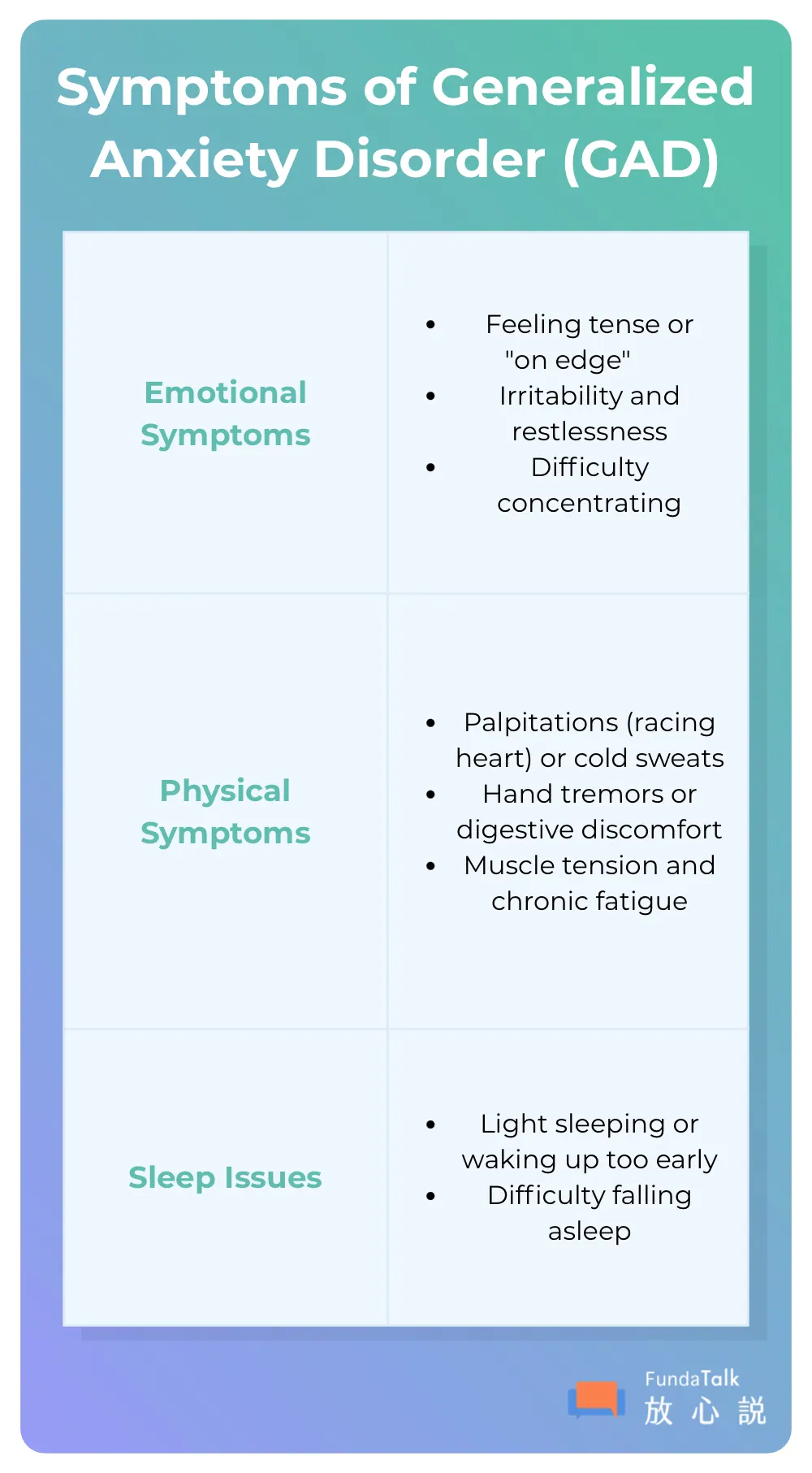
Emotional Aspects: Besides emotional tension, you may feel easily irritable, quick to anger, or unable to concentrate on studying or working.
Physical Aspects: Physical symptoms may include muscle tension, hand tremors, sudden shortness of breath, heart palpitations, cold sweats, gastrointestinal discomfort, and persistent fatigue.
Sleep Aspects: Wanting to rest at night but always sleeping poorly, often difficulty falling asleep, light sleep, or always waking earlier than the alarm. The mind also constantly replays negative scenarios, making true relaxation difficult.
Occasional anxiety is a normal emotional response, but if this state continues for over six months and already affects work, studies, or interpersonal life, it may be generalized anxiety disorder—worth having professionals examine.
What Causes Generalized Anxiety Disorder?
Generalized anxiety disorder has no single cause but results from multiple interacting factors. Common influencing sources include:
Physiological Aspects: Anxiety is closely related to brain neurotransmitters. When systems like serotonin, dopamine, or norepinephrine become imbalanced, the brain's way of processing stress and emotions becomes sensitive, making people more easily fall into anxious states. A family history of anxiety or depression can further raise the risk through genetic predisposition.
Psychological Aspects: Certain personality traits can make anxiety more likely to persist—such as perfectionism, a tendency toward self-blame, or difficulty managing stress. While these traits often reflect a strong sense of responsibility, they can become sources of recurring anxiety under sustained pressure. Psychotherapy often guides individuals to practice "self-compassion," learning to view themselves with more tolerant attitudes.
Environmental Aspects: Environment is like soil, determining whether anxiety seeds will sprout. Long-term high-pressure environments, experiencing major life events (such as losing loved ones, separation, accidents), or unstable life situations (such as workplace conflicts, family tensions) may all intensify and sustain anxiety over time.
How Is Generalized Anxiety Disorder Different from Other Anxiety Disorders?
Anxiety disorder is actually a big umbrella with many different forms underneath. Common classifications include:
Generalized Anxiety Disorder (GAD): Typical manifestation is long-term and persistent worry, potentially feeling uneasy about most daily situations. Individuals usually realize these things won't cause major impacts but still cannot completely stop anxiety feelings.
Social Anxiety Disorder: Main worry focuses on interpersonal interactions. People with social anxiety tend to be highly sensitive to how others perceive and evaluate them, and may avoid social situations altogether—affecting academic or workplace performance as a result.
Panic Disorder: Most obvious characteristic is panic attacks—suddenly appearing intense fear, rapid heartbeat, shortness of breath. During attacks, many people have feelings of imminent death.
Specific Phobia: Intense fear of specific things or situations, like airplanes, heights, insects. To avoid feared objects, many restrictions appear in life.
Understanding these classifications helps you more clearly determine: whether you have general anxiety or meet specific anxiety disorder characteristics, which also affects subsequent treatment directions.
When Should You See a Doctor for Generalized Anxiety Disorder?
Excessive worry is indeed one of the core manifestations of Generalized Anxiety Disorder (GAD), but not all worry represents illness. Distinguishing whether it's within disease scope can have the following reference points:
General Anxiety: Occasionally feeling anxious or tense, mostly related to specific, clear stressors and events—normal emotional responses.
Generalized Anxiety Disorder: If worry state persists for several months or more and affects work, study, or interpersonal life, it may meet diagnostic criteria [1].
GAD-7 Self-Assessment: How to Test for Generalized Anxiety Disorder
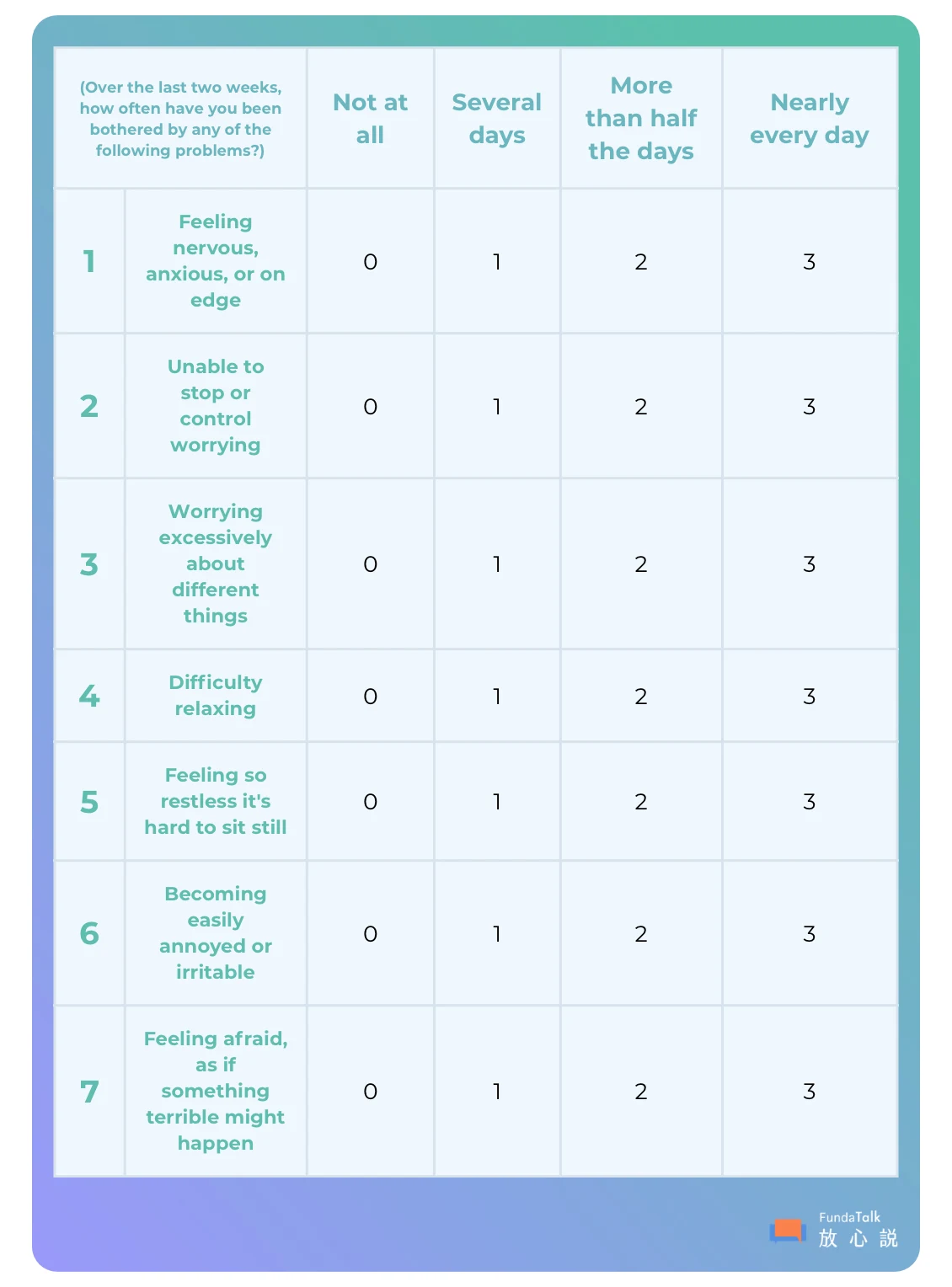
The GAD-7 scale is an internationally widely used self-testing tool providing preliminary reference for anxiety symptom severity.
Based on feelings in the past two weeks, select the frequency matching each question: 0=Not at all, 1=Several days, 2=More than half the days, 3=Nearly every day
Scoring Method
Add up each question's score, total 0–21
- 0–4: None or minimal anxiety
- 5–9: Mild anxiety
- 10–14: Moderate anxiety
15–21: Severe anxiety
Reminder: The GAD-7 scale is for self-reference only. If scores are high or affect life, seeking psychologist or psychiatrist evaluation and diagnosis is recommended.
GAD Treatment Options: Therapy, Medication, and rTMS
Treatment typically includes psychotherapy, medication treatment, brain stimulation treatment, etc.:
Psychotherapy
Cognitive Behavioral Therapy (CBT)
Cognitive Behavioral Therapy (CBT) is one of the most commonly used psychotherapies for treating generalized anxiety disorder. Its core lies in cognitive restructuring and behavioral intervention: the former helps individuals identify and adjust excessive worry or irrational thoughts, the latter gradually helps people face and reduce anxiety sources through relaxation training and behavioral experiments.
Research shows CBT has good effects on relieving symptoms and enhancing daily functioning, with relatively low relapse rates [3]. Another study also found online CBT can effectively improve anxiety symptoms with effects maintainable for some time [4], providing more convenient, accessible treatment options.
Mindfulness Therapy
When applied to generalized anxiety disorder, mindfulness therapy's core is: cultivating focus and acceptance of present experiences. Through practice, individuals learn to observe their thoughts and emotions rather than immediately being pulled by worry or panic. This approach helps reduce recurring anxiety loops, allowing more flexible responses to stressful situations. As self-awareness improves, patients gradually can respond with calm and open attitudes when anxiety appears rather than instinctively avoiding or overreacting, thereby improving quality of life.
Exposure Therapy
Exposure therapy guides patients to face anxiety-triggering situations or stimuli in safe and gradual ways. Through repeated exposure, patients gradually learn that anxiety won't cause substantial harm, reducing excessive worry and avoidance behaviors.
When combined with mindfulness therapy, patients can maintain awareness and acceptance when facing anxiety, thereby more effectively alleviating symptoms and enhancing daily life functioning and psychological resilience.
Medication Treatment
Common anti-anxiety medications or certain antidepressants can be used under Psychiatrist guidance to relieve anxiety and worry symptoms. Medication can relieve symptoms short-term, but optimal efficacy usually requires combination with psychotherapy, mindfulness practice, or lifestyle adjustments like regular routines, exercise, and stress management. Correct medication use and following medical advice can effectively improve daily functioning.
Repetitive Transcranial Magnetic Stimulation (rTMS)
For combined depression symptoms, repetitive transcranial magnetic stimulation (rTMS) treatment is a non-invasive brain stimulation technique using magnetic fields on emotion-regulating brain regions like the prefrontal cortex to regulate neural network function. For generalized anxiety disorder patients, rTMS can reduce excessive anxiety responses and autonomic nervous tension.
rTMS effects usually need time to accumulate. Recommended treatment frequency is 20-30 sessions for effects to gradually appear. rTMS side effects are mostly mild headaches or dizziness within tolerable range, and can be combined with medication treatment or psychotherapy to enhance overall efficacy and quality of life.
How to Calm Anxiety: Relaxation Techniques Across Four Dimensions
The following methods cover different aspects like body, senses, cognition, and social interaction, flexibly applicable in daily life:
Physical Level: Try placing attention on small movements, like slightly moving fingers or toes, feeling muscle activity. Can also use alternating hot-cold water to wash hands or face—through brief temperature stimulation promoting autonomic nervous regulation for temporary balance effects.
Sensory Level: By selecting one environmental sound, like rain, birdsong, or mechanical sounds, listening attentively to strengthen concentration. Another method is olfactory stimulation, especially using scents less frequently encountered, like herbs or essential oils, to interrupt anxiety's habitual responses.
Cognitive Level: Can divide time into parts, focusing attention on the present moment, the next hour, or today, avoiding facing too many anticipated events at once. Additionally, can record situations originally worried about but that didn't occur, gradually cultivating realistic assessment abilities for personal experiences.
Social Interaction Level: Select a trustworthy person or use AI to send simple symbols when anxious, thereby obtaining immediate support feelings. Another method is conducting short-time role-reversal activities, like simulating identity exchanges with others, temporarily viewing events from different perspectives, and reducing anxious thinking patterns.
Conclusion
Although generalized anxiety disorder may affect emotions, physical and mental health, and daily life, through early recognition, professional evaluation, and integrated treatment, most patients can effectively manage symptoms. Daily self-adjustment, regular living, and social support can also maintain symptom stability. Understanding anxiety causes, learning recognition, and taking appropriate action are keys for everyone moving toward healthy psychological states.
Extended Reading: What Is High-Functioning Anxiety? Self-Assessment and Treatment Methods at a Glance
Extended Reading: Racing Heart, Can't Breathe? | Understanding Panic Disorder: Self-Assessment, Definition, Symptoms, and Effective Relief Techniques
Extended Reading: What Is Social Phobia? Understanding Social Fear and Anxiety Characteristics, Causes, and Improvement Methods

Reviewed by: Dr. Pei-Chen Tsai

Treatment Areas:
Sleep disorders, anxiety disorders, depression, addiction disorders, attention-deficit/hyperactivity disorder (ADHD)
👉 I want to learn about online mental health consultation with Dr. Pei-Chen Tsai
References
- NICE. Generalised anxiety disorder and panic disorder in adults: management (CG113). 2011 (updated 2020). https://www.nice.org.uk/guidance/cg113
- Plummer, F., et al. Screening for anxiety disorders with the GAD-7 and GAD-2: a systematic review and diagnostic meta-analysis. General Hospital Psychiatry. 2016;39:24–31. https://pubmed.ncbi.nlm.nih.gov/26719105/
- Papola, D., Miguel, C., & Mazzaglia, M. (2024). Psychotherapies for generalized anxiety disorder in adults: A systematic review and network meta-analysis of randomized clinical trials. JAMA Psychiatry, 81(3), 250–259. https://doi.org/10.1001/jamapsychiatry.2023.3971
- Eilert, N., Enrique, A., Wogan, R., Mooney, O., Timulak, L., & Richards, D. (2021). Internet-delivered cognitive behavioral therapy for generalized anxiety disorder: Asystematic review and meta-analysis. Depression and Anxiety, 38(2), 196–219. https://doi.org/10.1002/da.23115
More Articles
 )
) )
) )
)