Racing Heart, Can’t Breathe, Suddenly Short of Breath? Understanding Panic Disorder: Symptoms, Assessment, Treatment, and 5 Self-Help Relief Techniques


Have you ever suddenly experienced a racing heart, couldn’t catch your breath, or felt like you were dying? You may have experienced a panic attack.
A panic attack is a sudden, extremely intense physical and mental reaction. Even when there’s no actual danger present, the body enters a fight-or-flight survival state. Symptoms include: heart palpitations, difficulty breathing, chest tightness, limb numbness, dizziness, and even feelings of unreality or impending death. Most panic attacks rapidly reach their peak within minutes, typically lasting between 10 to 30 minutes.
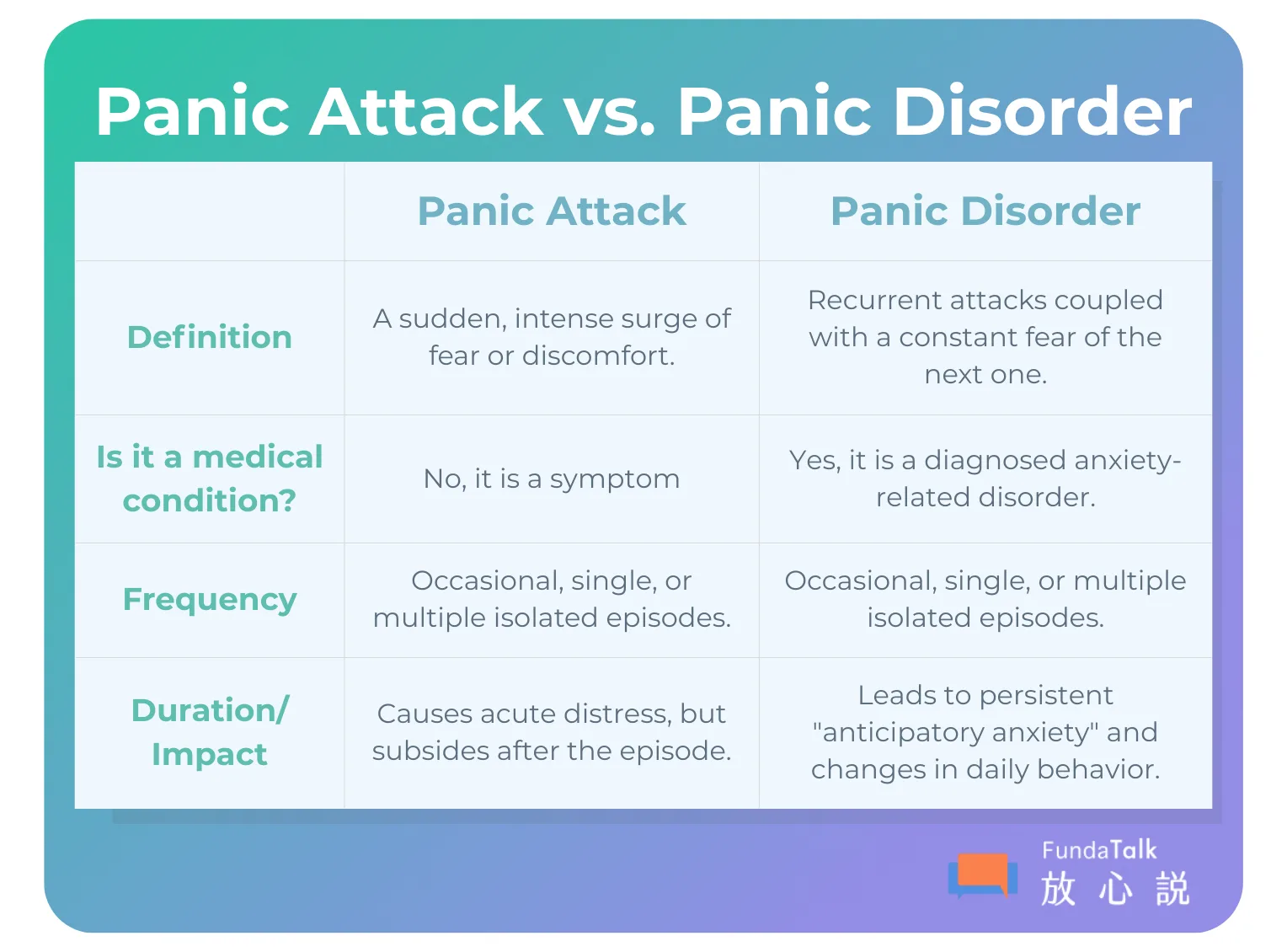
A panic attack itself is not a disease but a symptom that may appear in different mental health conditions, such as anxiety disorders, post-traumatic stress disorder (PTSD), or depression. It can also occasionally occur in people with no diagnosis at all.
This article will help you understand:
- What is panic disorder?
- What are the symptoms of panic disorder? 13 typical symptoms
- What’s the difference between panic disorder and anxiety disorder? (Comparison chart analysis)
- Long-term effects of panic attacks on the brain and daily life
- Treatment methods for panic disorder: Medication and non-medication approaches
- What to do if you have panic disorder? Five self-help relief techniques at a glance

What Is Panic Disorder? | Definition and Assessment
Panic disorder is a type of anxiety disorder defined by the DSM-5. Its diagnostic criteria aren’t just experiencing panic attacks but rather recurrent and unexpected panic attacks, followed by at least one month of at least one of the following concerns:
- Persistent worry about future panic attacks (anticipatory anxiety)
- Behavioral changes to avoid panic attacks (such as avoiding specific places or situations)
These attacks are not caused by medications, substances, or other medical conditions, and cannot be fully explained by other mental health disorders (such as social phobia or specific phobias).
What Are the Symptoms of Panic Disorder? 13 Typical Symptoms
Simple self-assessment: In the past month, have you experienced at least 4 of the following 13 symptoms without warning?
- If yes, seeking professional help is recommended.
Heart palpitations, rapid heartbeat - Shortness of breath or feeling of suffocation
- Chest pain or discomfort
- Dizziness, lightheadedness, loss of balance
- Numbness or tingling in limbs
- Sweating or trembling
- Chills or hot flashes
- Nausea, stomach discomfort
- Feelings of unreality or detachment from self
- Fear of losing control or going crazy
- Fear of dying
- Mental blankness or scattered attention
- Muscle tension, breathing difficulties
These symptoms feel very real in the moment and may even make you wonder if you’re having a heart attack or going crazy. These are actually autonomic nervous system responses that can be relieved through appropriate regulation.

What’s the Difference Between Panic Disorder and Anxiety Disorder? | Quick Understanding Through Comparison Chart
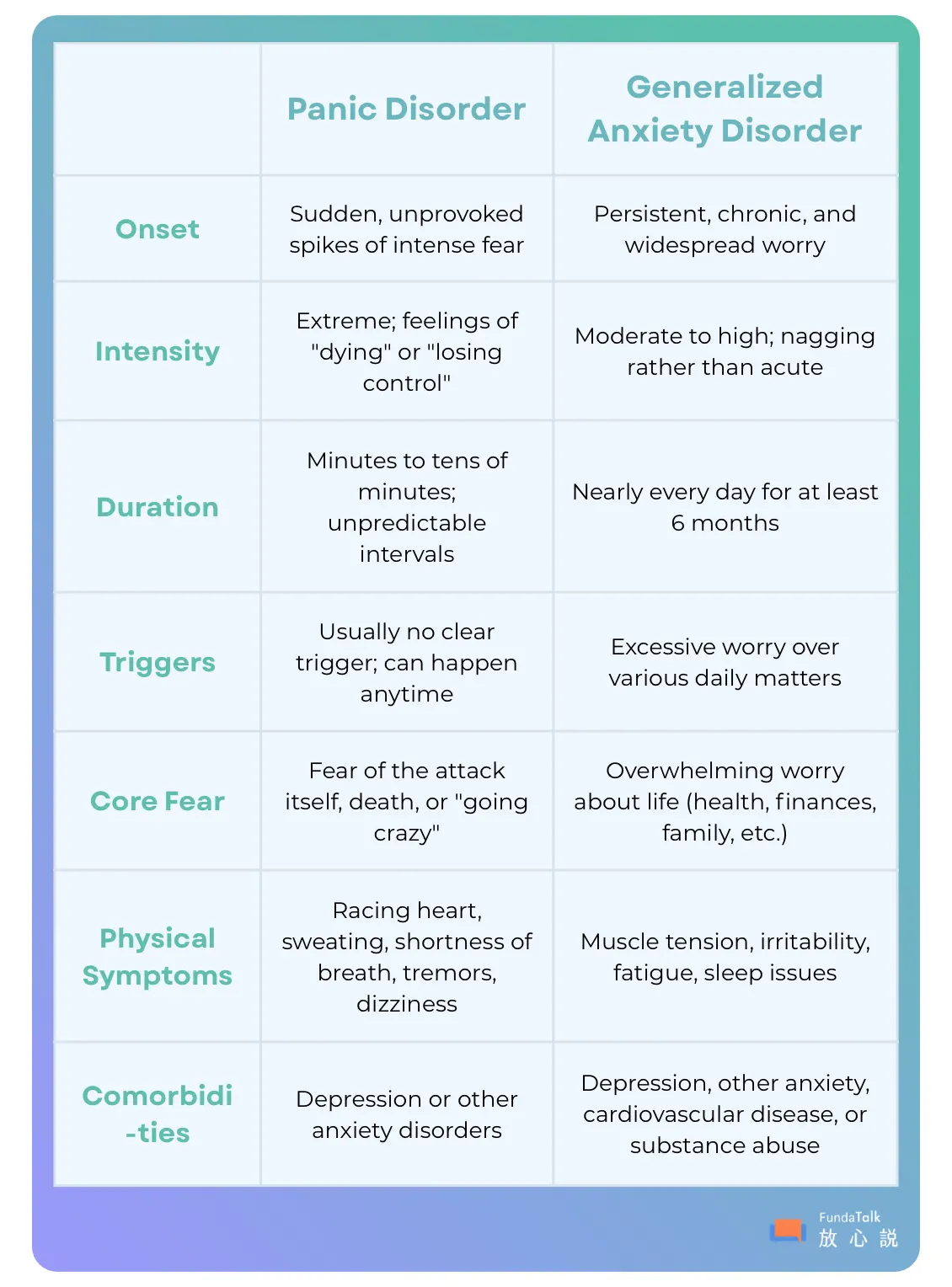
Many people confuse panic disorder with generalized anxiety disorder (GAD), but their mechanisms and experiential feelings are completely different.
Panic disorder is characterized by sudden, intense fear attacks, while generalized anxiety disorder involves long-term, widespread, and difficult-to-control anxiety and worry. Both may be accompanied by depression and other physical and mental problems, requiring early professional help. Here’s a clear comparison chart:
Impact of Panic Disorder on Life
Once you’ve experienced several attacks, many people begin to overly focus on when the next panic attack will come, even starting to avoid scenarios that might trigger attacks, such as taking elevators, attending meetings, or being alone.
From a psychiatrist’s perspective, chronic panic states keep the brain’s nervous system in a long-term “overdrive” state, leading to the following consequences:
Reduced Coping Ability: Panic disorder patients live in long-term anxiety and fear, significantly reducing their ability to adapt when facing stress and difficulties, making them more easily feel helpless when encountering life challenges.
Impaired Learning and Work Performance: Panic attacks distract attention, making it difficult for patients to concentrate on studies or work, leading to decreased performance and even affecting career development.
Decreased Immunity and Physical Health: Long-term anxiety and stress weaken the immune system, making patients more susceptible to illness and possibly experiencing physical discomfort such as insomnia, headaches, and indigestion.
Poor Treatment Response: Panic disorder patients may resist treatment due to fear of attacks, leading to poor treatment effectiveness and even affecting pain tolerance.
Loss of Behavioral Control and Social Withdrawal: To avoid future attacks, patients may deliberately avoid certain places or activities, shrinking their social circle and narrowing their life sphere. In severe cases, they may develop agoraphobia (fear of open or enclosed spaces).
Mental Health Deterioration and Comorbidities: Panic disorder often coexists with depression, anxiety disorders, insomnia, substance abuse, etc. If left untreated, there’s even higher suicide risk.
Significantly Reduced Quality of Life: Long-term suffering from panic attacks, patients worry about the future, daily activities are limited, and overall quality of life substantially decreases.
👉 Are you experiencing similar feelings? Talk to a psychiatrist about your situation
Treatment Methods for Panic Disorder: Medication and Non-Medication Approaches
Panic disorder treatment typically recommends “medication + non-medication” approaches in parallel, adjusting treatment plans according to individual circumstances. The treatment process requires close cooperation with physicians and regular follow-ups to achieve optimal therapeutic effects.
1. Medication Treatment
- Antidepressants (such as SSRIs) are the first-line choice; anti-anxiety medications (such as benzodiazepines) can be used short-term or when necessary
- Requires physician monitoring of side effects and dosage adjustments—never increase, decrease dosage, or stop medication on your own
Medication treatment typically needs to continue for several months and be adjusted based on individual response
2. Cognitive Behavioral Therapy (CBT)
Through cognitive restructuring, exposure therapy, behavioral training, etc., helps patients identify and correct misconceptions about panic (such as the automatic thought “panic → catastrophe”), reducing attack frequency and intensity
Learn to reinterpret body signals, reducing false alarm rates
3. Behavioral Therapy
Includes exposure therapy, allowing patients to gradually face situations that trigger panic, reducing fear of these situations
4. Progressive Muscle Relaxation and Breathing Training
- Such as abdominal breathing, progressive muscle relaxation, meditation, etc., helps relieve anxiety and physical tension
- Helps the brain switch from the sympathetic nervous system (fight mode) to the parasympathetic nervous system (recovery mode)
5. Group Therapy and Supportive Psychodynamic Therapy
- Reduces feelings of isolation, seeing hope through others’ experiences
- Rebuilds self-worth and sense of security

What to Do If You Have Panic Disorder? Five Self-Help Relief Techniques at a Glance
You don’t need to solve everything at once, but you can start with these small things:
1. Create an “Anxiety Journal”
Record the time, circumstances, and physical reactions of each attack, helping you identify patterns and triggers
2. Breathing and Muscle Relaxation Exercises
Recommended: breathe in through your nose, slowly exhale through your mouth, focusing on breathing rhythm. Can be combined with progressive muscle relaxation, gradually relaxing muscles in all parts of the body, reducing tension.
3. Practice “Grounding Exercises”
For example, when you feel you’re about to lose control, use your five senses to return to the present moment—touch your fingertips, observe 5 objects in the room, reminding yourself “I’m here, I’m still here.”
4. Reduce Caffeine and High Sugar Intake
Reduce stimulants like caffeine and alcohol, which stimulate the nervous system, making you more likely to misinterpret body signals, intensifying anxiety and panic symptoms.
5. Avoid “Emotional Short-Circuit” Thinking
During panic, we tend to jump to worst-case scenarios. Observe and accept present feelings, remind yourself “This is just a panic attack, it will pass” instead of “I’m doomed.”
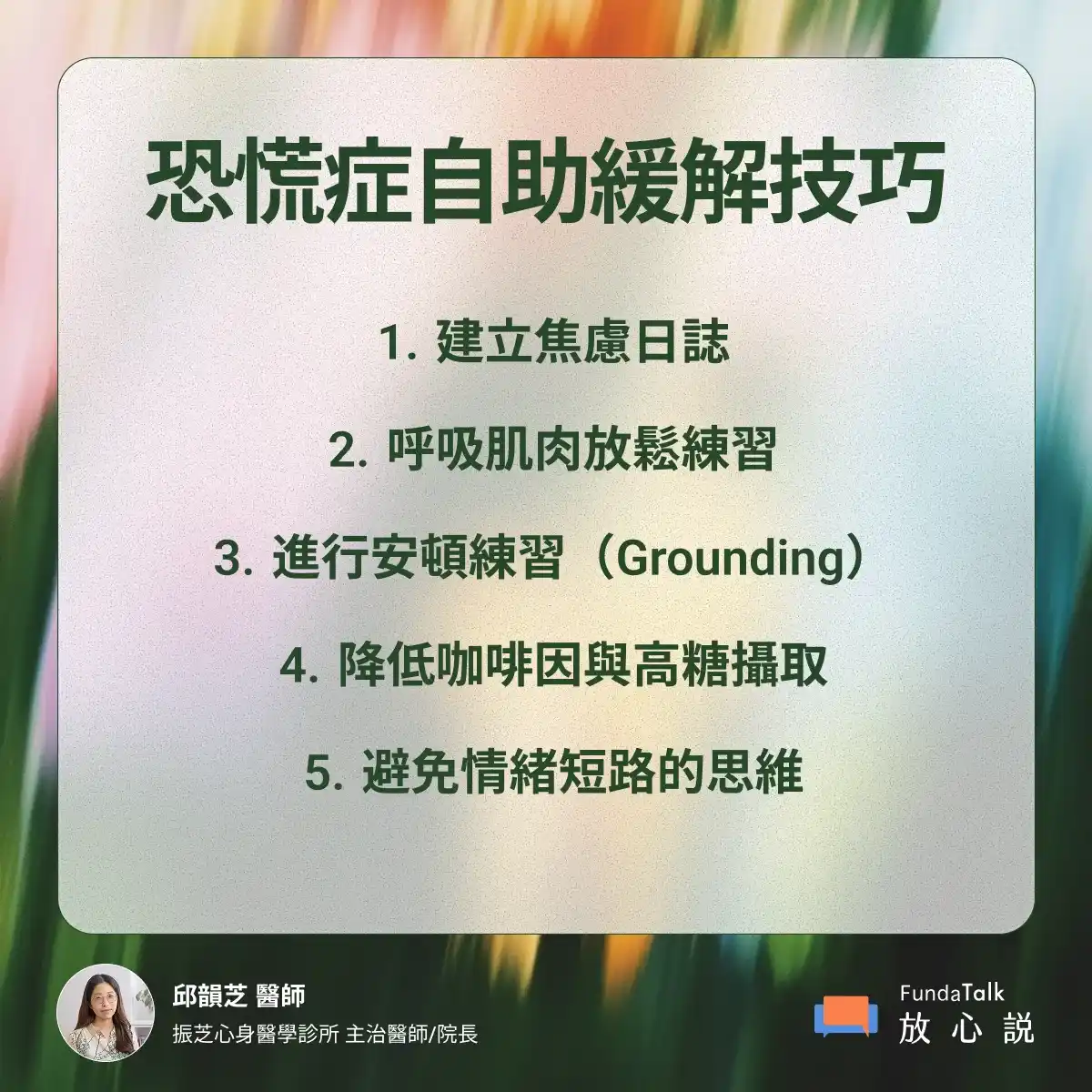
Dr. Yun-Chih Chiu states that these self-help techniques can help you stabilize emotions during attacks and also aid in daily prevention and symptom reduction. If self-help methods have limited effectiveness, seeking professional medical assistance and combining medication with psychotherapy is recommended for better improvement.
Conclusion
The essence of panic disorder is nervous system sensitization leading to excessive vigilance—a comprehensible physical and mental mechanism. Through appropriate treatment and self-care, you can regain a sense of security and control over your life.
👉 Ready to consult? Fundatalk psychiatrists are waiting for you online
Extended Reading
Acute Stress Disorder (ASD) Symptoms, Causes, and Differences from PTSD
About Post-Traumatic Stress Disorder (PTSD): Symptoms, Impact, How is PTSD Different from Depression and Anxiety?
Reviewed by: Dr. Yun-Chih Chiu

Treatment Areas:
Depression, bipolar disorder, panic disorder, obsessive-compulsive disorder, anorexia/bulimia, psychosomatic disorders, trauma syndrome (outpatient care limited to ages 16 and above; those under 18 require guardian accompaniment)
👉 Click here to schedule an appointment with Dr. Yun-Chih Chiu for online consultation
More Articles
 )
) )
) )
)