My Child Refuses to Go to School: Causes of School Refusal in Teens and How to Help


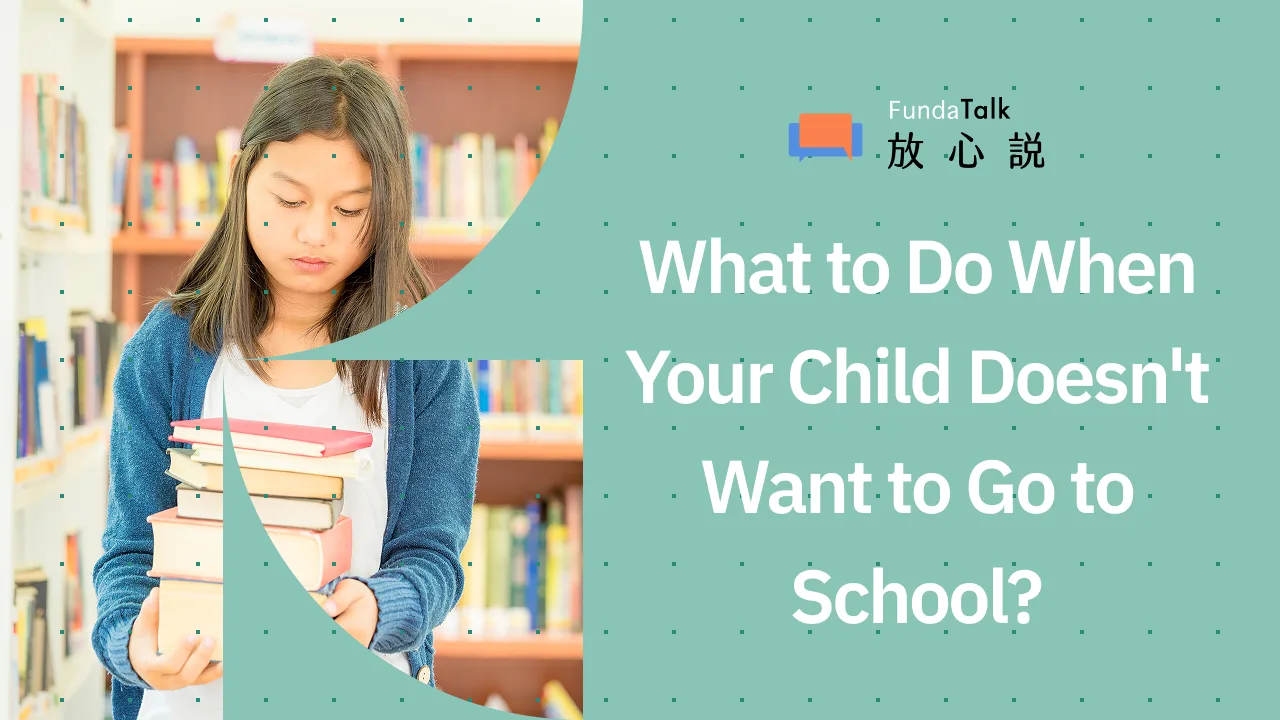
"Why won't they just go to school?"
It's one of the most common things parents say in the clinic. The teenager sitting beside them usually stays quiet, head down, unsure how to explain something they may not fully understand themselves.
Adolescence is a period of intense pressure on multiple fronts at once: academic demands, shifting friendships, physical changes, and questions about identity.
When these pressures pile up, school refusal can emerge, not as defiance, but as a sign that something has become too hard to carry.
This article covers:
- Why teenagers refuse to go to school: three common causes
How to support a child through school refusal: three practical principles

Part 1: Why Do Teenagers Refuse to Go to School?
1. Personal Factors: When the School Environment Feels Overwhelming
For some teenagers, the school environment is genuinely harder to manage than it appears from the outside.
This can be physical: a child who gets stomachaches easily, who is sensitive to noise or crowds, or who tires more quickly than peers. These aren't excuses. They're real experiences that create friction every single morning.
It can also be psychological. Children who are hard on themselves, who fear making mistakes, or who constantly worry about how others see them don't experience school as just learning. They experience it as a continuous test of whether they're good enough. That internal pressure is exhausting, even when nothing visibly goes wrong.
These traits aren't flaws. But they do mean some children need to work harder than others just to get through a typical school day.
When parents understand this, it becomes easier to respond with curiosity rather than frustration [1].
2. Family Factors: How Home Life Shapes a Child's Sense of Safety
Children absorb the emotional climate at home, even when adults try to shield them from it.
Research published in the Taiwan Journal of Counseling Psychology in 2024 found that when families are navigating stress, health issues, conflict, or major transitions, children often become unsettled. They may not be able to name what's changed, but they feel it. In that context, staying home can become a way to reduce overwhelm, not a choice, but a coping response.
Something parents often miss:is the weight of unspoken expectations.
Children are acutely sensitive to what their parents value. Even without being told directly, a child who senses that grades or achievement matter deeply to their parents may quietly carry the fear of letting them down.
When school becomes associated with disappointing the people they love most, avoidance starts to make emotional sense.
3. School and Social Factors: When the Environment Itself Becomes the Problem
The pace and social complexity of school is often more demanding than parents realize.
A class reassignment, a shift in teacher style, new rules, heavier coursework: each of these requires adjustment. For a teenager already stretched thin, even one of these changes can tip the balance.
Peer dynamics are particularly easy to underestimate. Being left out of a group, navigating tension after a falling out, or simply not knowing where you belong socially, all of these make walking into school feel like entering a space where something might go wrong.
The cumulative effect can make school feel more like a source of stress than a place of learning [1].
👉Not sure where to start? Talk to a psychologist about what you're seeing.
Part 2: How to Help a Child Who Refuses to Go to School
1. Presence Matters More Than Answers
When a teenager refuses to go to school, they may not be able to tell you why, because they don't fully know themselves. The adolescent brain is still developing the capacity to identify stress, put it into words, and regulate emotion. Asking "Why won't you just go?" often closes the conversation rather than opening it.
More helpful approaches start with presence rather than pressure. Try questions like: "What part of your morning feels the hardest?" or "Is there anything that's been on your mind lately?" If they go quiet, that's okay too. Let them know: "You don't have to explain it yet. We're not going anywhere."
The goal at this stage isn't answers. It's letting your child feel seen rather than interrogated. When that safety increases, they'll have more room to move.
2. Rebuild Routine Before Pushing for Return
Teenagers under prolonged stress often develop disrupted sleep, irregular eating, and low physical energy. Pushing for immediate return to school while these basics are destabilized is unlikely to work, and may increase resistance.
Start smaller.
Help establish a loose daily rhythm: a consistent wake time, a meal together, time outside, something enjoyable. If sleep is severely disrupted, try shifting bedtime by 30 minutes rather than attempting a full reset overnight.
These small stabilizations create the foundation that makes everything else possible.
3. Set Small, Achievable Steps Back Toward School
After extended absence, returning to full-time school can feel impossible. Breaking it into smaller steps reduces the all-or-nothing pressure and lets confidence build gradually.
Some examples to consider, in order of increasing difficulty:
- Completing a small piece of schoolwork at home.
- Walking to the school gate and back.
- A brief visit to meet a teacher or a familiar classmate.
- Attending an after-school club or activity they enjoy.
- Attending a half day, then gradually increasing.
Each step that gets completed is evidence to your child that they can handle more than they thought.
That evidence matters.
👉 I'd like a psychologist to help me figure out next steps
Does My Child Need Professional Support?
A common question parents ask is whether they can, or should, force their child to go to school. Clinically, pressure and coercion tend to deepen the anxiety driving school refusal rather than resolve it. The more useful question is: what's making school feel impossible, and how do we address that?
If any of the following have been present for more than a few weeks, professional evaluation is worth considering:
- Persistent low mood, tearfulness, or withdrawal.
- Anxiety symptoms: physical complaints before school, difficulty sleeping, frequent panic.
- Significant changes in appetite or energy.
- Complete avoidance of social contact outside the home.
If your child is resistant to the idea of seeing someone, parents can make the first appointment alone. A mental health professional can help you understand what you're seeing and find a gentler path forward.
FundaTalk offers adolescent-friendly online therapy and psychiatric consultations, with connections to in-person clinic care in Taiwan for families who need it.
👉 Learn about online consultation with Dr. Pei-Chen Tsai
A Note to Parents
When your child says they can't go to school, they're not giving up. They're telling you something has become too heavy to carry alone. The goal isn't to get them back through the school gates as fast as possible. It's to help them rebuild enough stability that going back becomes possible again.
Adolescent struggles that are met with understanding, rather than pressure, have a way of becoming turning points.
Author: Dr. Pei-Chen Tsai, Psychiatrist

Treatment Areas:
Sleep disorders, anxiety disorders, depression, addiction disorders, attention-deficit/hyperactivity disorder (ADHD)
👉 I want to learn about online mental health consultation with Dr. Pei-Chen Tsai
Extended Reading
- What to Do If You're Being Bullied at School: Definition, Common Forms, Long-Term Effects, and How to Protect Yourself
- Want to Try Online Psychological Counseling? Pricing, Process, Preparation Items, and Free Resources at a Glance
- What Is Social Phobia? Understanding Social Fear and Anxiety Characteristics, Causes, and Improvement Methods
- What Is High-Functioning Anxiety? Assessment, Self-Soothing Methods, Medication and Non-Medication Treatments at a Glance
References
- Hsu, C.-H. (2024). Exploring school refusal problems in children and adolescents: Ecological system perspective on causes, interventions, and case studies. Taiwan Journal of Counseling Psychology, 12(1), 34-63. https://doi.org/10.53106/2304781X2024051201002
More Articles
 )
) )
) )
)