Internet Addiction: Symptoms, Causes, a Self-Test, and 6 Ways to Overcome I


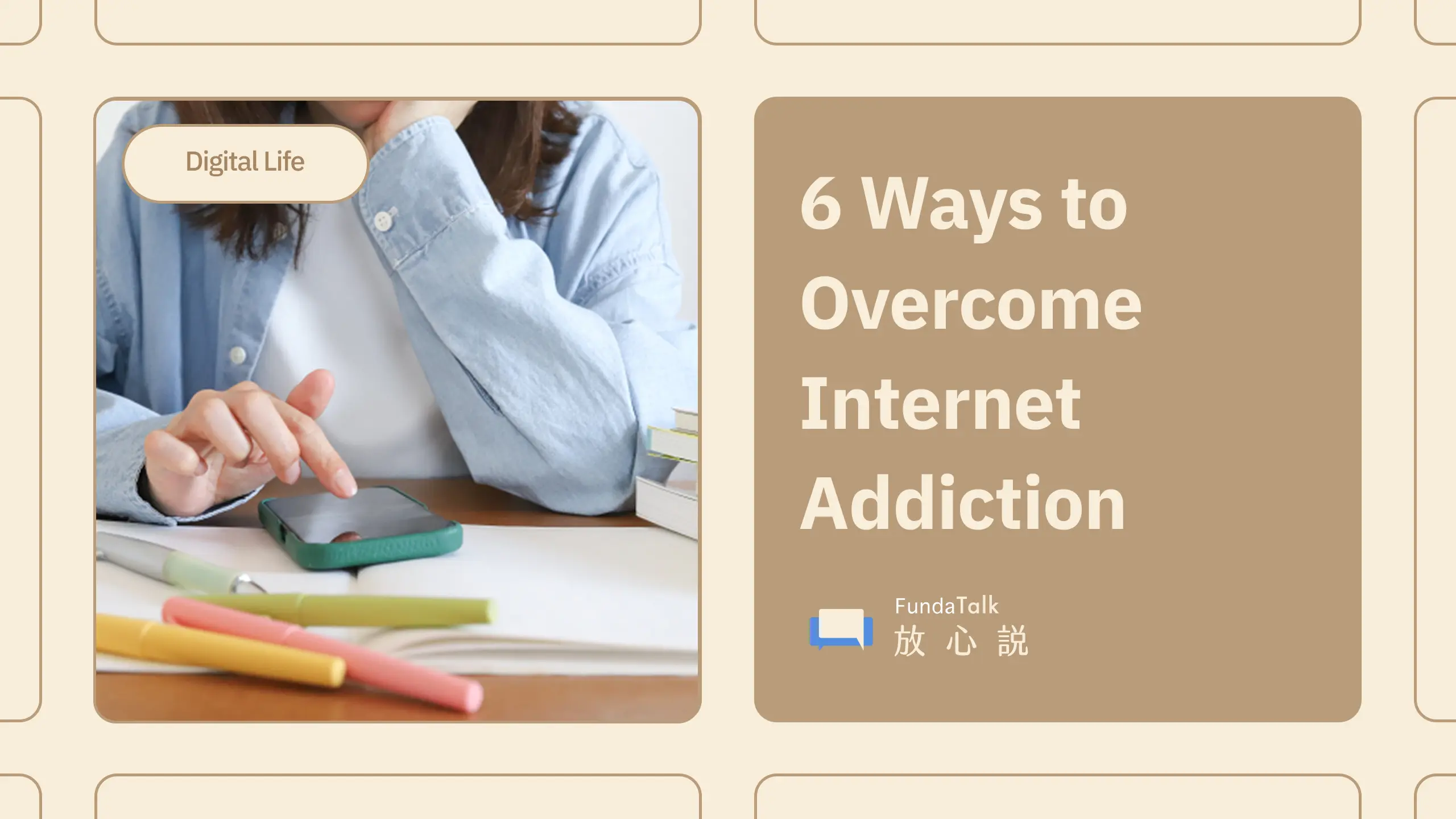
You just meant to check your messages, and half an hour is gone. You promised yourself one more round before bed, and when you look up, it's 1 a.m. Short videos are even harder: one clip leads to the next, and you can't seem to stop scrolling.
Spending a lot of time online doesn't automatically mean you have internet addiction. What matters more than the hours is whether you can stop when you want to. Another key question is whether your internet use is getting in the way of your sleep, school, work, or relationships.
In this article, you'll learn:
- What internet addiction is
- What the symptoms of internet addiction are
- 5 common causes of internet addiction
- How internet addiction affects your life
- A simple internet addiction test you can take
- 6 ways to overcome internet addiction
- When it's time to get help for internet addiction
What Is Internet Addiction?
Internet addiction, sometimes called internet addiction disorder or problematic internet use, means having trouble controlling how much you go online. You keep using the internet excessively, even when it’s already affecting your sleep, schoolwork, work, or relationships [1].
Unlike alcohol or nicotine dependence, internet addiction involves a behavior rather than a substance. That's why it's often discussed as a behavioral addiction.
What Are the Symptoms of Internet Addiction?
Common symptoms of internet addiction include [2]:
- Loss of control: You often stay online longer than you planned, and stopping is harder than you expected.
- Tolerance and withdrawal: You spend more and more time online, and you feel irritable or restless when you can't get online.
- Reliance on the internet to cope: Whenever you feel stressed, bored, lonely, or anxious, you go online or play games to take your mind off things.
- Impact on daily life: Time online gradually crowds out sleep, school, and work, and even cuts into time with family and friends.
What Are 5 Common Causes of Internet Addiction?
Internet addiction rarely comes down to a single cause, and the five factors below often overlap.
1. The Internet Offers Instant Gratification
Clearing a game level, new messages, social media interactions, and recommended short videos all give you fast feedback.
Short videos are especially hard to resist because they play automatically and match your interests. Even if one clip is boring, you think, "The next one might be better." Before you know it, you've been scrolling for a long time.
2. Going Online Becomes a Way to Cope With Emotions
When you're feeling down or bored out of your mind, the internet can temporarily take your attention off how you feel. If going online becomes your only or easiest way to cope, you're more likely to keep coming back whenever you feel uncomfortable.
3. Fear of Missing Out or Losing Touch
Sometimes you keep checking social media or messages because you're worried about missing friends' updates, group chats, or trending topics. This feeling is known as fear of missing out (FOMO).
Social media can make you feel accepted and give you a sense of belonging. If people respond to you more readily online, those interactions may gradually replace other ways of staying connected.
4. Emotional Difficulties May Be Part of the Picture
Internet addiction often occurs alongside other mental health concerns, such as depression and anxiety [1]. Some people go online more and more because they feel low or uneasy and want to feel better.
A 2023 meta-analysis of students found that problematic internet use was moderately linked to depression, anxiety, loneliness, and other mental health outcomes [3].
5. Family, School, and Peer Factors in Teens
For teens, academic pressure, conflict with parents, being left out by peers, and a lack of support can all turn the internet into an important safe haven.
For example, a teen who's often overlooked at school may find friends in online games who want to team up and chat. As a result, that teen may spend even more time online.
How Does Internet Addiction Affect Your Life?
Internet addiction most often affects your sleep, focus, mood, and relationships.
A 2019 meta-analysis pooled 23 studies with 35,684 participants. The analysis found that people with internet addiction had about 2.2 times higher odds of sleep problems than typical internet users [4]. When you don't sleep well, you're also more likely to feel drained and have trouble concentrating during the day.
Emotionally, the more severe someone's internet addiction is, the more noticeable their depression, anxiety, and loneliness tend to be [3]. However, these studies alone can't tell us which one causes the other.
Is There an Internet Addiction Test?
Yes. One option is the Internet Use Habits Self-Screening Scale from Taiwan's Ministry of Health and Welfare.
The scale has just four items. Thinking about the past six months, rate how well each statement describes you:
1 = Not at all like me 2 = Not like me 3 = Like me 4 = Very much like me
- I feel restless when I want to go online but can't.
- I've noticed that I spend more and more time online for leisure.
- I often cut back on sleep so I can spend more time online for leisure.
- Going online has already had a negative effect on my schoolwork.
What Does Your Score Mean?
Add up your scores for all four items to get a total between 4 and 16. A total of 11 or higher suggests a higher risk of problematic internet use.
Whatever your score, if you feel your internet use is affecting your life, the tips in the next section can help you make changes.
What Are 6 Ways to Overcome Internet Addiction?
Overcoming internet addiction doesn't have to start with going offline completely. A good place to start is understanding the role the internet plays in your life. From there, you can adjust your habits one step at a time.
1. Track your usage
Write down when you go online, how long you stay, and how you were feeling right before you opened the app.
2. Set one small goal first
For example, go to bed before midnight, skip social media during class, or check messages in set blocks while you work.
3. Make your phone harder to reach
Turn off unnecessary notifications, move your most-used apps off your home screen, and charge your phone on your desk or outside your bedroom at night.
4. Have alternatives ready
If you want to relax, take a walk or listen to music. If you want to talk to someone, give them a call. Bring a book along for when you're waiting for the bus or standing in line.
5. Learn what your loved one does online
If you're worried that a family member spends too much time online, hold off on asking, "How long were you on today?" Instead, talk about what they've been watching or playing lately. Once you have a better picture, they'll likely be more honest when you bring up screen time.
6. Set rules together as a family
Talk things over when everyone is calm. For example, agree that games come after homework, or that phones stay in the living room after 10 p.m. Rules you agree on ahead of time tend to last longer than last-minute scolding or taking away a phone.
A meta-analysis of studies in young people also suggests that cognitive behavioral therapy (CBT), group counseling, exercise, and educational programs may help reduce internet addiction [5].
When Is It Time to Get Help for Internet Addiction?
Consider seeing a psychiatrist for an evaluation if you notice any of the following:
- You've tried to cut back on internet use many times but haven't been able to.
- You often stay up late, miss classes, or take days off, and your work or schoolwork is suffering.
- You easily lose your temper when you can't go online, and you often clash with your family.
- You're also dealing with insomnia, depression, anxiety, or similar problems.
During your appointment, your psychiatrist will work with you to understand the emotions behind your internet use. You'll also talk about your sleep and what's going on at home, school, or work. Then you'll decide on an internet addiction treatment plan together.
Final Thoughts
The next time you catch yourself reaching for your phone, pause for a moment. Ask yourself: Do I really want to see this content? Or am I bored, anxious, or avoiding something I need to face?
If you’ve tried to make changes several times but your internet use still affects your sleep, schoolwork, or work, consider reaching out for professional support. A mental health professional can help you understand what keeps pulling you online and take back control of your daily routine.
Author: Dr. Pei-Chen Tsai, Psychiatrist

Dr. Pei-Chen Tsai focuses on helping individuals with depression, anxiety disorders, panic disorder, and obsessive-compulsive disorder, as well as assisting in evaluating and addressing psychological difficulties in children and adolescents. Her professional areas also include alcohol and substance addiction issues, as well as sedative-hypnotic medication addiction.
Treatment Areas:
Sleep disorders, anxiety disorders, depression, addiction disorders, attention-deficit/hyperactivity disorder (ADHD)
Further Reading
- Can't Fall Asleep? Insomnia Symptoms, Self-Assessment, Sleep-Promoting Foods, and Non-Medication Treatments at a Glance
- What Does Social Anxiety Mean, and Do I Have It? Symptoms, Causes, Self-Test & Treatment
- My Child Refuses to Go to School: Causes of School Refusal in Teens and How to Help
- Adult ADHD: Symptoms, Diagnosis, Treatment & Self-Assessment
- Does Therapy Really Work? Do I Need Counseling? Pricing, Free Resources, and Top Online Platforms
References
- Internet Addiction Section – Department of Mental Health, Ministry of Health and Welfare, Taiwan [in Chinese]. https://dep.mohw.gov.tw/DOMHAOH/cp-4104-87265-107.html
- American Psychiatric Association. Internet gaming. https://www.psychiatry.org/patients-families/internet-gaming
- Cai, Z., Mao, P., Wang, Z., Wang, D., He, J., & Fan, X. (2023). Associations between problematic internet use and mental health outcomes of students: A meta-analytic review. Adolescent Research Review, 8(1), 45–62. https://pmc.ncbi.nlm.nih.gov/articles/PMC9883821/
- Alimoradi, Z., Lin, C.-Y., Broström, A., Bülow, P. H., Bajalan, Z., Griffiths, M. D., Ohayon, M. M., & Pakpour, A. H. (2019). Internet addiction and sleep problems: A systematic review and meta-analysis. Sleep Medicine Reviews, 47, 51–61. https://irep.ntu.ac.uk/id/eprint/36923
- Jiang, Y.-S., Liu, T.-H., Qin, D., Wang, Z.-P., He, X.-Y., & Chen, Y.-N. (2024). Effects of non-pharmacological interventions on youth with internet addiction: A systematic review and meta-analysis of randomized controlled trials. Frontiers in Psychiatry, 14, 1327200. https://doi.org/10.3389/fpsyt.2023.1327200
More Articles
 )
 )
 )