What Are the Treatment Options for Depression? Introduction to Medication, Psychotherapy, and rTMS (Transcranial Magnetic Stimulation)


Depression is a quite complex brain disease.
Treatment has no single fixed approach—usually multiple methods need to be combined to achieve the best results. Understanding different treatment options and principles helps you face treatment with more peace of mind and work with the medical team to find the most suitable recovery path for yourself.

What Are the Core Treatment Methods for Depression?
Depression treatment can roughly be divided into two major categories: medication treatment and non-medication treatment.
Medication Treatment
Research has found that depression is often related to imbalances in certain brain neurotransmitters (like serotonin, norepinephrine, dopamine). The role of antidepressants is to help regulate these substances, allowing the brain to return to relatively normal functioning. These three neurotransmitters have complex interactive relationships with each other and each participates in regulating emotions, motivation, attention, and stress responses.
Therefore, medications targeting different systems may relieve different symptoms, thereby enhancing overall treatment effectiveness [1].
The most common medications include:
- Selective Serotonin Reuptake Inhibitors (SSRIs)
- Serotonin and Norepinephrine Reuptake Inhibitors (SNRIs)
Physicians will select appropriate medications based on each individual’s condition. Note that medications usually need several weeks to gradually start taking effect and require a complete 3-6 month treatment period to ensure thorough depression recovery.
Initially, there may be some mild side effects (like nausea, dizziness), but most will decrease over time. If more serious side effects occur that feel unbearable, it’s recommended to temporarily stop medication, return for early follow-up, and discuss medication adjustment with your physician. You must take medication regularly as prescribed and attend follow-ups on time—physicians will adjust dosage or change medications based on the situation. If symptoms improve, you should also gradually reduce or stop medication under physician evaluation. Don’t discontinue on your own to avoid relapse or withdrawal symptoms.
A 2022 paper published in the British Journal of Psychiatry indicated: Long-term (>5 years) SNRI or SSRI users have significantly increased probability of cardiovascular and cerebrovascular diseases [2].
Additionally, many side effects seriously affect patients’ quality of life, including sexual dysfunction (72%), emotional blunting (63%), weight gain (65%), etc.
Does long-term medication use truly help stabilize conditions? Actually, there’s no strong evidence supporting this. Conversely, withdrawal symptoms from stopping medication are very uncomfortable and may persist for months.
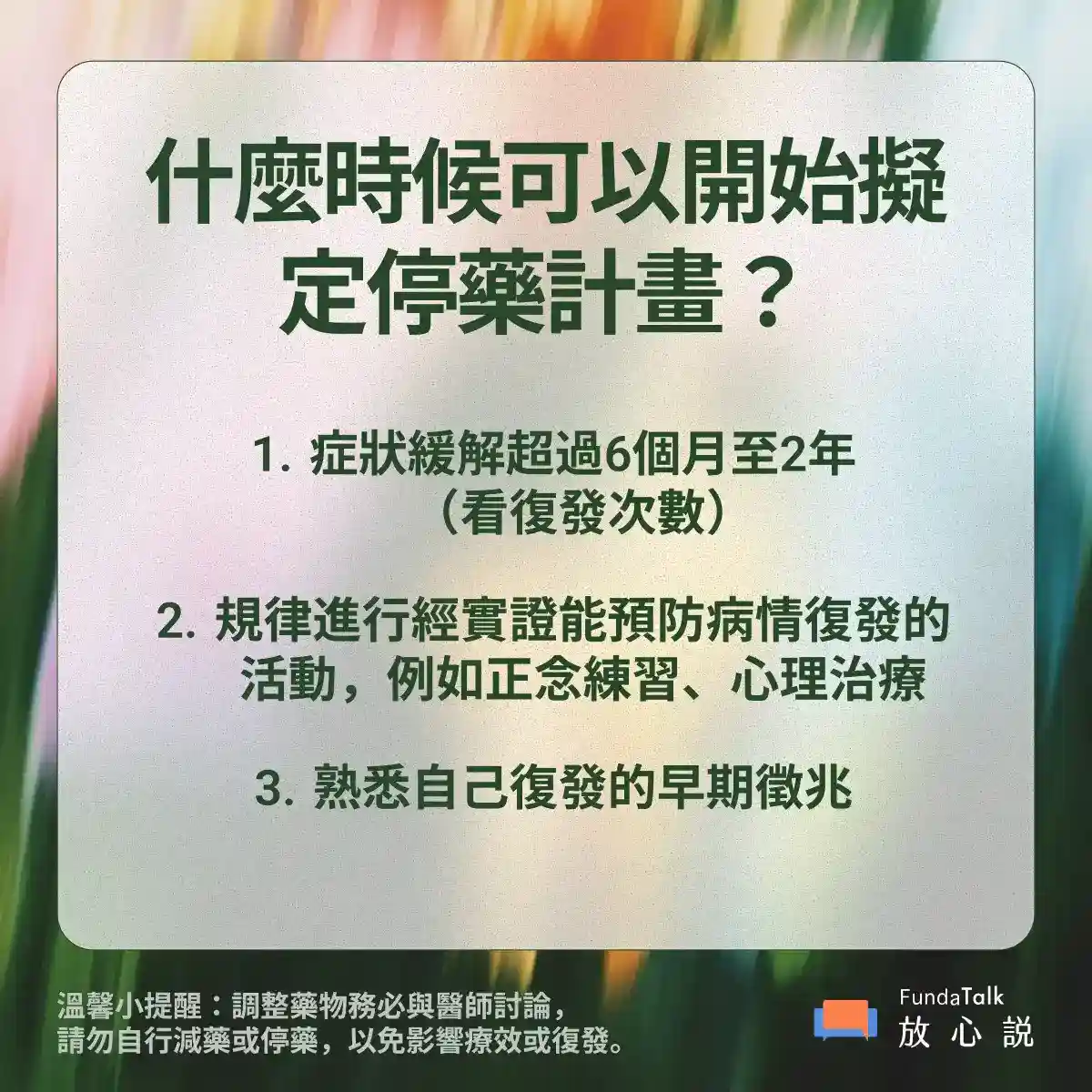
If SSRIs aren’t suitable for long-term use, when can a medication discontinuation plan begin?
- Symptoms have been relieved for over 6 months to 2 years (depending on relapse frequency)
- Regularly engaging in evidence-based activities that prevent relapse, such as mindfulness practice and psychotherapy
- Familiar with early signs of your own relapse
Important reminder: Depression medications need physician evaluation and adjustment. Never reduce or stop medication on your own, as this may lead to symptom deterioration or relapse.
Non-Medication Treatment
Non-medication treatment plays an equally important role in depression recovery, helping patients address emotions, thinking patterns, and behavioral patterns from multiple dimensions.
Psychotherapy
Cognitive Behavioral Therapy (CBT)
Has the most evidence-based research for depression psychotherapy. By identifying and changing negative automatic thought patterns and unhealthy behavioral responses, helps patients build more positive, adaptive coping strategies.
Interpersonal Therapy (IPT)
Focuses on improving patients’ interpersonal relationship problems, as these problems are often related to depression’s occurrence or deterioration.
Mindfulness-Based Cognitive Therapy (MBCT)
Through practices including body scans, meditation, and yoga, cultivates ability to focus on the present moment and observe physical and mental sensations without judgment. Helps patients learn to coexist with negative emotions, reduce rumination, and respond early to depression relapse signs. Multiple international studies have clearly proven that 8-week MBCT courses have relapse prevention effects comparable to medication.
Brain Stimulation Treatment (rTMS - Transcranial Magnetic Stimulation)
For patients who respond poorly to medication or psychotherapy, brain stimulation treatment may be an option. Repetitive Transcranial Magnetic Stimulation (rTMS) is a brain stimulation treatment newly approved by Taiwan’s Ministry of Health and Welfare in 2018, suitable for treatment-resistant depression—that is, patients who respond poorly to 2 or more medications. rTMS’s characteristic is stimulating the cerebral cortex through specific-frequency magnetic pulses, regulating neuron activity and improving mood. This is a non-invasive physical treatment, relatively safe with very mild side effects.
It must be noted that at least 3-5 rTMS sessions per week, totaling over 20 sessions, are needed to stabilize depression symptoms. After this, maintenance treatment must be continued, such as low-dose medication, psychotherapy, Mindfulness-Based Cognitive Therapy (MBCT), or once-weekly maintenance rTMS.
Click to learn: How do rTMS and psychotherapy combine? What are the effects? Let’s understand together!
Why Is Integrated Treatment Important?
Actually, very few people fully recover using only one method. Research shows that medication treatment combined with psychotherapy has more stable effects than single treatment and can better prevent relapse. Medication can help stabilize the brain first, while psychotherapy can address deep emotions and life stress—the two mutually support each other more helpfully.

Treatment Principles and Reminders
Early Recognition and Timely Intervention: Depression’s early symptoms are often mistaken for just being in a bad mood, lacking willpower, or complaining without reason. If recognized and intervened early, it can greatly reduce long-term nervous system damage and risk of life and occupational function deterioration.
Treatment Needs Dynamic Adjustment: Depression treatment isn’t one-size-fits-all but needs dynamic adjustment based on disease progression, physiological responses, and life circumstances to truly achieve long-term stability.
Establish Cross-Professional Support Network: Psychiatrists, nurses, psychologists, social workers, occupational psychologists, etc., each have roles on the recovery road. Jointly formulating and reviewing treatment strategies with professional teams helps enhance overall effectiveness and safety.
Facing depression, bravely seeking professional help is the first step toward recovery. Through scientific, personalized integrated treatment, many people can gradually emerge from darkness and regain health and life’s joy. If you need discussion or support, don’t hesitate—feel free to talk with physicians or psychologists anytime.
Click to learn: What’s the Difference Between Mild, Moderate, and Severe Depression? Severity Levels, Symptoms, and Treatment Options at a Glance
Click to learn: What Are Major Depression Symptoms? | Lying in Bed All Day Isn’t Laziness: They May Have Major Depressive Disorder
Author: Dr. Ching-Lun Hung

Treatment Areas:
Depression, bipolar disorder, post-traumatic stress disorder, anorexia/bulimia/binge eating disorder, addiction disorders
👉 I want to learn about online mental health consultation with Dr. Ching-Lun Hung
References
- Liu, Y., Zhao, J., & Guo, W. (2018). Emotional roles of mono-aminergic neurotransmitters in major depressive disorder and anxiety disorders. Frontiers in Psychology, 9, 2201. https://doi.org/10.3389/fpsyg.2018.02201
- Bansal, N., Hudda, M., Payne, R. A., Smith, D. J., Kessler, D., & Wiles, N. (2022). Antidepressant use and risk of adverse outcomes: Population-based cohort study. BJPsych Open, 8(5), e147. Cambridge University Press. https://doi.org/10.1192/bjo.2022.563
More Articles
 )
) )
) )
)