What Are Depression Symptoms? Complete Analysis from Physical Discomfort to Low Mood


In the general public's perception, depression is often simplified as "being in a bad mood." However, from a psychiatric perspective, depression is a mental illness that may affect physical, motivational, cognitive, and emotional dimensions.
Below we'll organize common symptoms of depression across four major dimensions, helping with early symptom identification and seeking appropriate assistance.

1. Physical Symptoms: Thinking It's Just Physical Illness, But May Actually Be Psychological Distress Manifestation
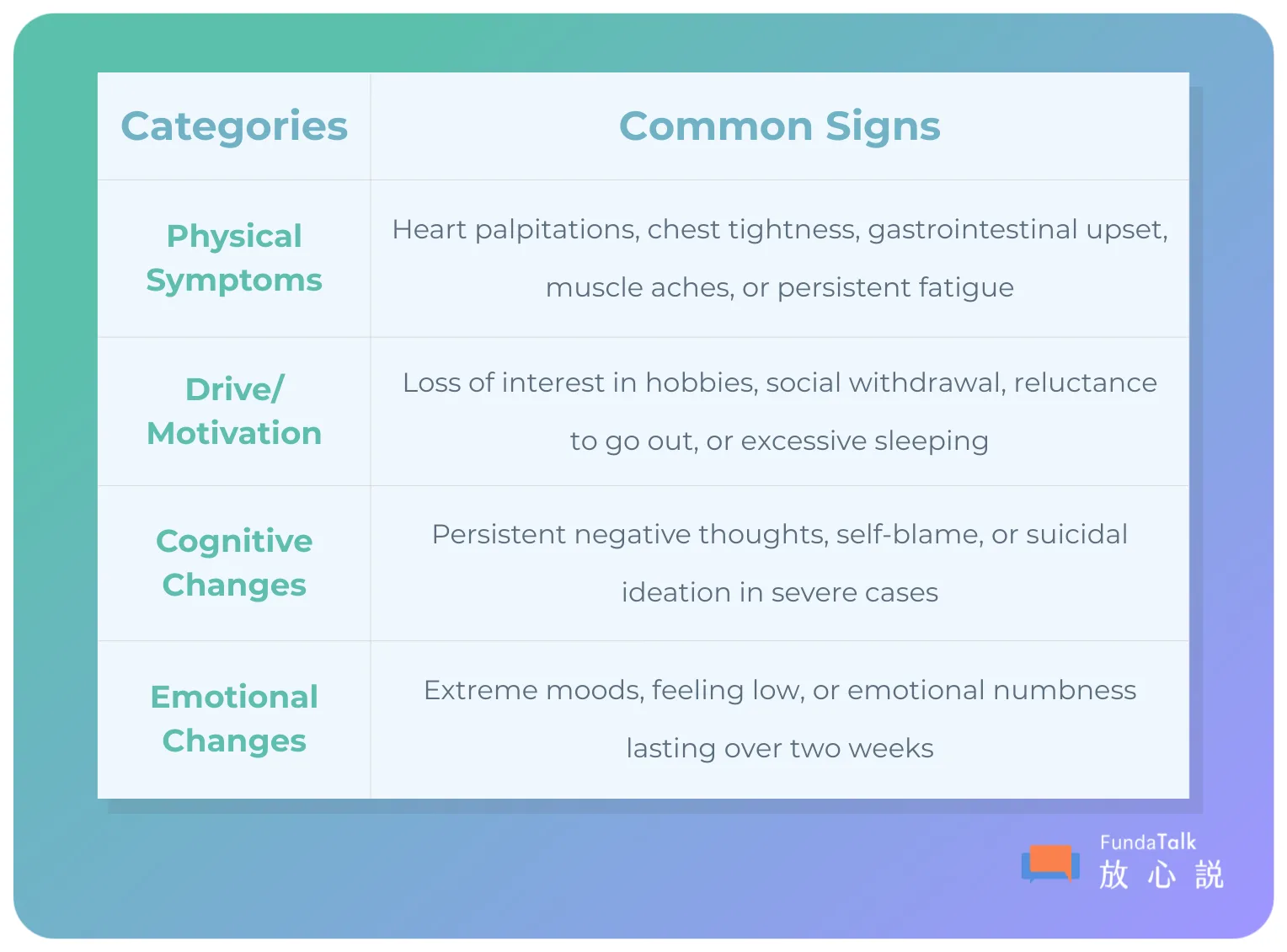
Many patients initially manifest with physical discomfort symptoms, such as:
- Heart palpitations, chest tightness
- Gastrointestinal discomfort, diarrhea or constipation
- Muscle tension or soreness
- Limb numbness or persistent fatigue
These symptoms are often mistaken for heart disease, autonomic nervous system dysregulation, or gastrointestinal problems. If physical examinations show no clear abnormalities, further evaluation is recommended to determine whether they're related to psychological stress or emotional distress.
2. Motivation and Behavioral Changes: Significantly Decreased Life Motivation
Depression is often accompanied by decreased motivation and behavioral changes, such as:
- Loss of interest in normally enjoyed activities
- Social withdrawal, unwillingness to go out
- Sleep difficulties (insomnia or excessive sleeping)
- Appetite changes (binge eating or loss of appetite)
These phenomena aren't laziness or personal willpower issues but are related to changes in brain neurotransmitters.
3. Thinking Pattern Changes: Cognitive Bias and Negative Self-Evaluation
- Cognitive-level changes are also very common, including:
- Persistent negative thinking and self-blame
- Increased feelings of helplessness and hopelessness
- Loss of confidence in the future
- In severe cases, suicide-related thoughts or behavioral plans may appear
If such thinking patterns significantly interfere with life, early discussion with professionals is recommended to assess risks and seek safe intervention.
4. Emotional Changes: Persistent Low Mood for Over Two Weeks, Difficult to Self-Regulate
Depression's emotional symptoms include:
- Persistent low mood or emptiness lasting over two weeks
- Extreme emotional reactions (such as sudden crying, irritability)
- Feeling numb or lacking emotional connection
- Loss of hope or sense of value in life
If these emotional states affect work, relationships, or daily functioning, they should be considered important mental health indicators.
When Should You Seek Help?
If the above symptoms persist for over two weeks and affect quality of life, interpersonal relationships, or work performance, seeking initial evaluation and discussion with a psychiatrist or mental health professional is recommended.
Depression is not weak willpower or poor personal ability but a treatable mental illness.

Conclusion
Early detection and treatment can effectively improve symptoms, reduce relapse rates, and help individuals reconnect with life's meaning and motivation. Mental and physical health is a long-term care process—bravely facing challenges and seeking help is the first step toward recovery and self-care.
Extended Reading Recommendations:
- What's the Difference Between Mild, Moderate, and Severe Depression? Severity Levels, Classification, Symptoms, and Treatment Methods at a Glance
- When Family Members Have Mental Symptoms, What Should You Do? When to Take Them to Mental Health Services? | Family Self-Help Guide + Mental Health Resource Map
Author: Dr. Yun-Chih Chiu

Treatment Areas:
Depression, bipolar disorder, panic disorder, obsessive-compulsive disorder, anorexia/bulimia, psychosomatic disorders, trauma syndrome (outpatient care limited to ages 16 and above; those under 18 require guardian accompaniment)
👉 I want to learn about online mental health consultation with Dr. Yun-Chih Chiu
More Articles
 )
) )
) )
)