Using Melatonin for Insomnia? Common Myths, Side Effects, Purchase and Usage Guide


What Is Melatonin?
Melatonin is a hormone naturally secreted by the human body, primarily secreted at night, responsible for signaling the body to prepare for sleep. The suprachiasmatic nucleus (SCN) in the brain plays the role of "biological clock commander," regulating melatonin secretion based on light signals.
When light is abundant during the day, the SCN suppresses melatonin release; at night or in dim light, it prompts the pineal gland to secrete melatonin, helping body temperature drop and heart rate slow, thereby entering a relaxed and sleep-ready state.
Three Major Physiological Functions of Melatonin
- Regulates Biological Clock (Circadian Rhythm): Melatonin helps the body distinguish day from night, thereby adjusting sleep cycles, body temperature, and other hormone secretions—it's key to stabilizing biological rhythms.
- Neuroprotection and Mood Regulation: Research shows melatonin has neuroprotective effects, helping improve neuroplasticity, thereby alleviating emotional distress such as depression and anxiety [1].
- Antioxidant: Melatonin is a natural antioxidant that can neutralize free radicals and reduce oxidative stress [1].
Who Might Need Melatonin Supplementation?
- Shift Workers: Day-night reversal easily disrupts biological rhythms, affecting sleep onset and sleep quality.
- Elderly People: As age increases, melatonin secretion naturally declines, leading to light sleep, early waking, and other problems.
- Short-term Insomnia Sufferers: Those experiencing temporary insomnia due to stress, jet lag, or life changes may consider short-term use.
- Jet Lag Sufferers: Long-distance travelers crossing multiple time zones can adjust their routines by supplementing melatonin, reducing jet lag discomfort.
Quick reminder: Pregnant or breastfeeding women, autoimmune disease patients, those taking anticoagulants, blood pressure medications, or psychiatric medications should consult a physician first and not take it on their own.

Common Myths Debunked
Q1: Is melatonin a sleeping pill?
No. It's an endogenous hormone regulating the biological clock with a different mechanism of action than sleeping pills, though it also has sleep-promoting effects.
Q2: Is melatonin addictive?
No. Current research shows melatonin is not addictive, and stopping use doesn't cause withdrawal reactions or rebound insomnia [2]. For long-term insomnia, it's still recommended to consult professional physicians to clarify whether there are underlying factors like stress, anxiety, or routine issues; while supplements may help alleviate symptoms, they may not address root causes.
Q3: Is higher dosage more effective?
Not at all. Research indicates low doses (such as 0.3-1mg) are sufficient to effectively regulate sleep timing, while excessively high doses (such as 5mg or more) may actually delay effects and cause side effects like dizziness and daytime drowsiness [3].
Q4: Will melatonin make you fall asleep immediately?
No. Melatonin doesn't produce rapid sleep-inducing effects like traditional sleeping pills. Generally, it's recommended to take it 30-60 minutes before intended bedtime. For those adjusting routines, taking it 3-4 hours early and combining it with morning sunlight exposure helps stabilize rhythms.
Q5: Does natural ingredient mean completely safe?
Not necessarily. While melatonin is a natural hormone, side effects like headaches, nausea, and abnormal dreams may still occur. If taking other medications simultaneously (such as antidepressants or anticoagulants), drug interactions may occur.
Correct Usage and Dosage Recommendations
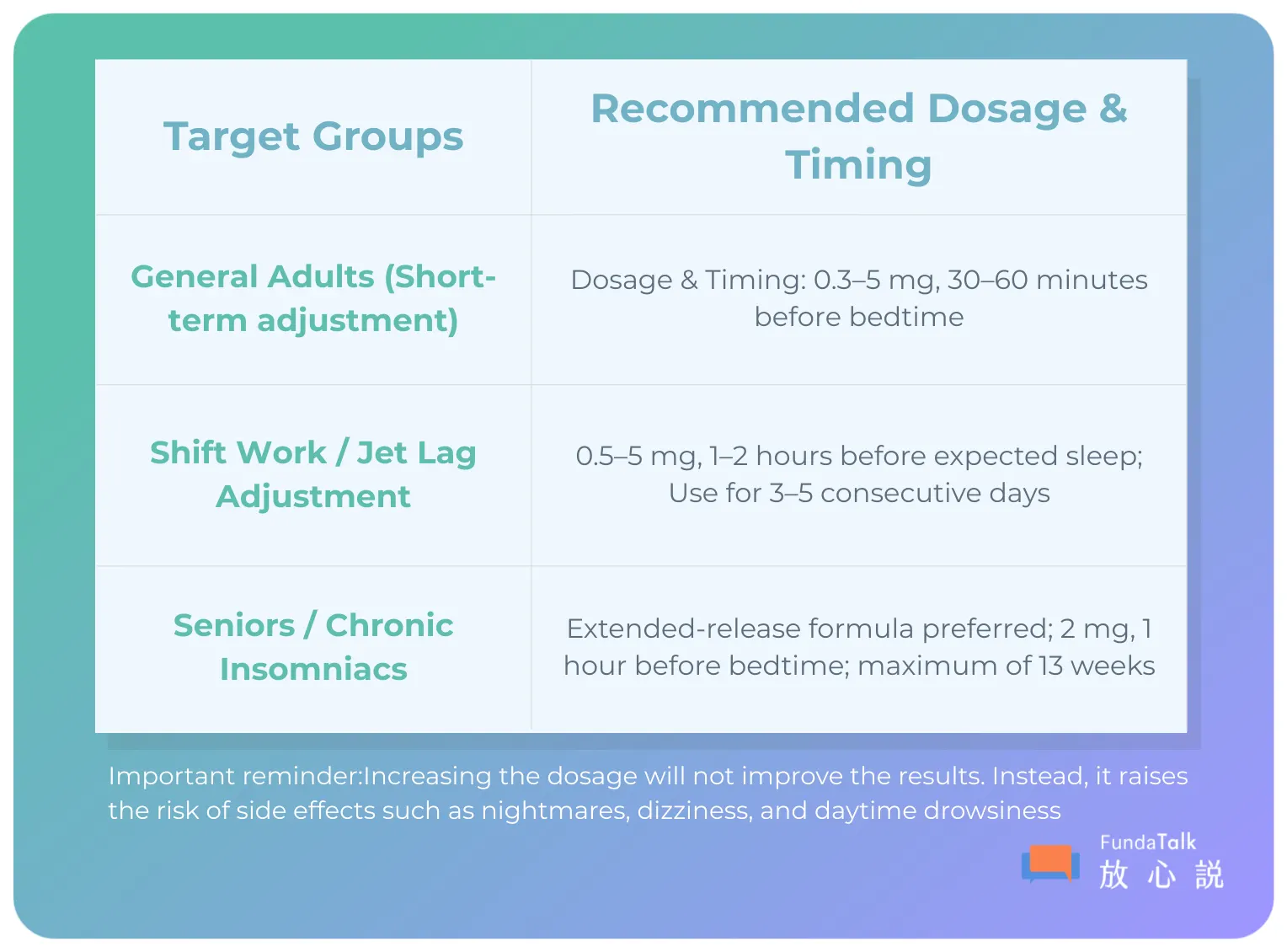
General Adults: For adults undergoing short-term adjustment, recommended daily dosage is 0.3-5mg, taken 30-60 minutes before bedtime.
Shift Work, Jet Lag Factors: Recommended 0.5-5mg daily, taken 1-2 hours before intended sleep time, continued for 3-5 days.
Elderly or Chronic Insomnia Sufferers: Recommended to use extended-release melatonin, taking 2mg one hour before bedtime, up to 13 weeks maximum.
⚠️ Reminder: Self-increasing dosage doesn't enhance effects but rather increases side effect risks, such as nightmares, dizziness, daytime drowsiness, etc.
Legal Purchase Channels
In Taiwan, melatonin is a controlled substance requiring physician prescription for legal use. Common prescribing departments include psychiatry, sleep clinics, or family medicine.
- Not recommended to purchase from overseas shopping platforms or online independently—this constitutes illegal importation and may bring the following risks:
- Excessive Dosage: Overseas health supplements commonly contain 3-10mg, exceeding Taiwan's recommended dosage.
- Unstable Quality: Commercial products commonly have ingredients inconsistent with labeling, with discrepancies as high as 400%.
Drug Interaction Risks: When combined with other medications (such as antiepileptics, sleeping pills), side effect risks may increase.
It's recommended to see a psychiatrist first and use melatonin after physician evaluation to ensure effectiveness and safety.
Besides Melatonin Supplementation, How Else Can Sleep Be Improved?
- Fixed Routine Times: Go to bed and wake up at fixed times every day (including holidays) to help the body establish stable rhythms.
- Reduce Blue Light Exposure Before Bed: Avoid screen devices one hour before bed; if necessary, enable night mode or wear blue light-blocking glasses.
- Create Comfortable Sleep Environment: Keep bedroom quiet, dark, and cool; use blackout curtains, earplugs, white noise machines, etc.
- Establish Relaxation Rituals: Bathing, deep breathing, meditation, drinking warm milk or chamomile tea help the body enter a relaxed state.
- Avoid Stimulants and Long Naps: Avoid caffeine, alcohol, and nicotine 4-6 hours before bed; naps should not exceed 20-30 minutes.
Conclusion
Melatonin can help adjust the biological clock and has potential benefits for jet lag, shift work schedule disruptions, elderly light sleep, and other situations. But it's not a cure-all and cannot replace healthy routines and lifestyle habits.
If long-term sleep difficulties occur, you should seek professional psychiatrist evaluation to find the root cause. Correctly understanding melatonin allows it to fulfill its proper supportive role, moving toward truly stable and good sleep quality.
Extended Reading: "Overthinking, Can't Sleep Well, No Energy?" How to Stop Internal Exhaustion? Psychology Teaches You Four Self-Help Methods to Enhance "Self-Awareness" and Escape Anxiety and Confusion
Extended Reading: Want to Try Online Psychological Counseling? Pricing, Process, Preparation Items, and Free Resources at a Glance
Author: Dr. Hung-Hsi Wu

Treatment Areas:
Anxiety disorders, depression, autism/Asperger’s syndrome, attention-deficit/hyperactivity disorder, children and adolescent populations
👉 I want to learn about online consultation with Dr. Hung-Hsi Wu
References
- Valdés-Tovar, M., Estrada-Reyes, R., Solís-Chagoyán, H., Argueta, J., Dorantes-Barrón, A. M., Quero-Chávez, D., Cruz-Garduño, R., Cercós, M. G., Trueta, C., Oikawa-Sala, J., Dubocovich, M. L., & Benítez-King, G. (2018). Circadian modulation of neuroplasticity by melatonin: A target in the treatment of depression. British Journal of Pharmacology, 175(16), 3200–3208. https://doi.org/10.1111/bph.14197
Givler, D., Givler, A., Luther, P. M., Wenger, D. M., Ahmadzadeh, S., Shekoohi, S., Edinoff, A. N., Dorius, B. K., Jean Baptiste, C., Cornett, E. M., Kaye, A. M., & Kaye, A. D. (2023). Chronic administration of melatonin: Physiological and clinical considerations. Neurology International, 15(1), 518–533.
- Moon, E., Partonen, T., Beaulieu, S., & Linnaranta, O. (2022). Melatonergic agents influence the sleep-wake and circadian rhythms in healthy and psychiatric participants: A systematic review and meta-analysis of randomized controlled trials. Neuropsychopharmacology, 47(8), 1523–1536. https://doi.org/10.1038/s41386-022-01278-5
More Articles
 )
) )
) )
)