How to Determine Bipolar Disorder? Understanding Bipolar Affective Disorder Symptoms, Self-Assessment, Treatment, and Differences from Depression


What Is Bipolar Disorder?
Bipolar affective disorder, commonly known as bipolar disorder or manic depression, is a mood disorder. Patients' moods swing extremely between "manic episodes" and "depressive episodes". Manic episodes feature excessive excitement, confidence, or impulsive behavior, while depressive episodes may bring feelings of depression, powerlessness, and loss of interest.
How to Distinguish Between Bipolar I and Bipolar II Disorder Symptoms?
Bipolar disorder can be divided into Bipolar I Disorder and Bipolar II Disorder.
Bipolar I Disorder
The key to determining Bipolar I Disorder is whether a "manic episode" has occurred. During this period, mood is particularly elevated or irritable, with excessive energy lasting over a week, severely affecting life and work. This isn't caused by medications or physical conditions but is a sign of mood system illness. Whether major depressive episodes have occurred is not a necessary condition.
Bipolar II Disorder
Bipolar II Disorder refers to experiencing at least one hypomanic episode accompanied by major depressive episodes. Hypomanic episodes typically last several days—patients may have particularly good moods or be particularly impulsive, but not to the extent of seriously disrupting life.
Whether Bipolar I or II, diagnosing manic or hypomanic episodes requires 3 or more of the following symptoms; if the primary mood is irritability, 4 or more must be met:
- Inflated self-esteem or grandiosity
- Decreased need for sleep
- Impulsive speech, speaking rapidly and unable to stop, more
- talkative than usual
- Racing thoughts or flight of ideas
- Highly distractible attention
- Significant increase in goal-directed activities (socially, at work, academically, or sexually), or psychomotor agitation (purposeless excessive activity)
Excessive involvement in activities with potentially serious
consequences (such as unrestrained shopping, reckless sexual
behavior, imprudent investments) [1]

What's the Difference Between Bipolar Disorder and Depression?
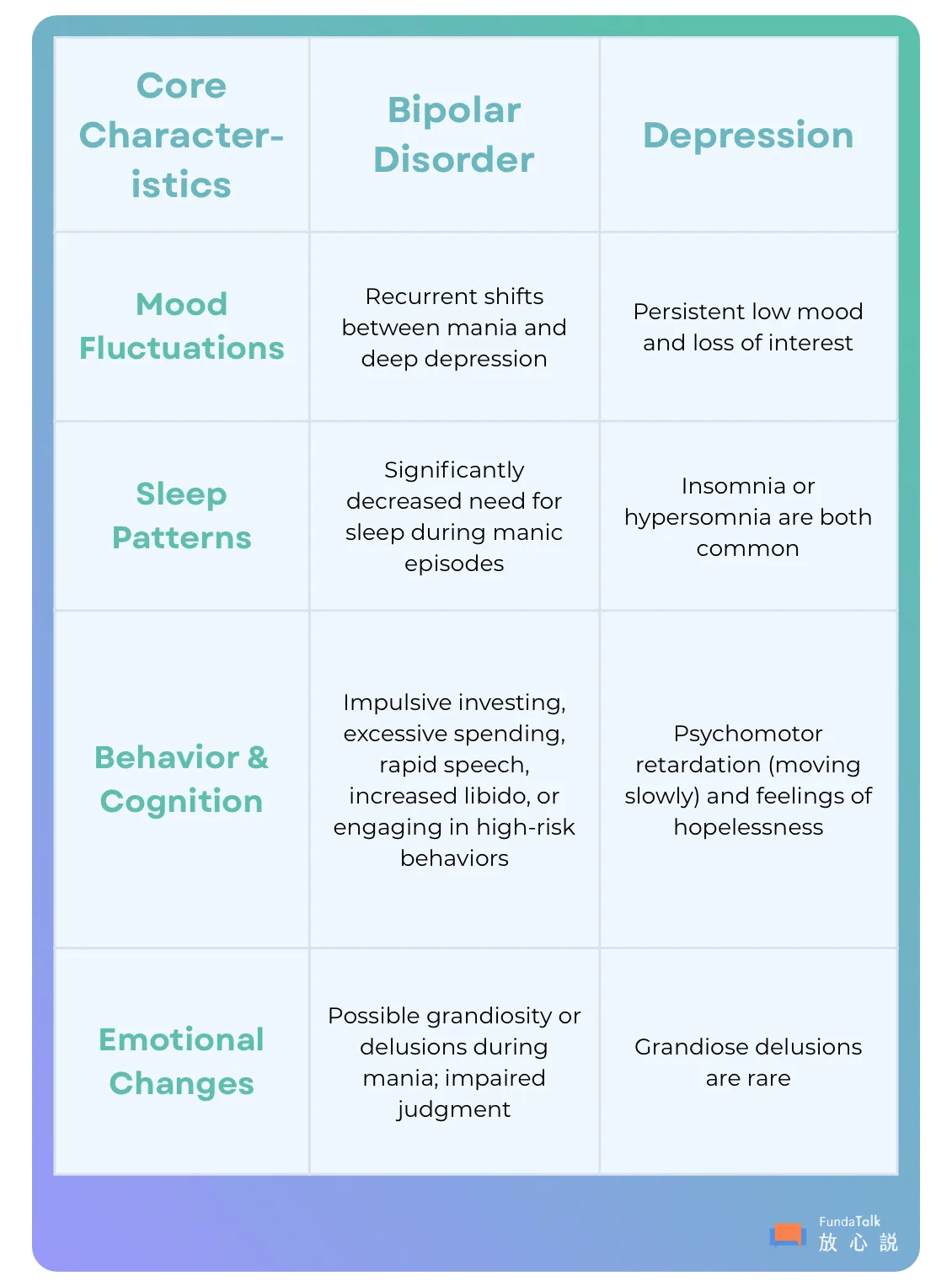
Pure major depression primarily involves persistent low mood; bipolar disorder has obvious bipolar mood fluctuations:
Major depression primarily involves persistent low mood, while bipolar disorder shows bipolar fluctuations.
Extended reading: What Are Depression Symptoms? Complete Analysis from Physical Discomfort to Low Mood
What Are Bipolar Disorder Signs? Manic and Depressive Episodes Differ
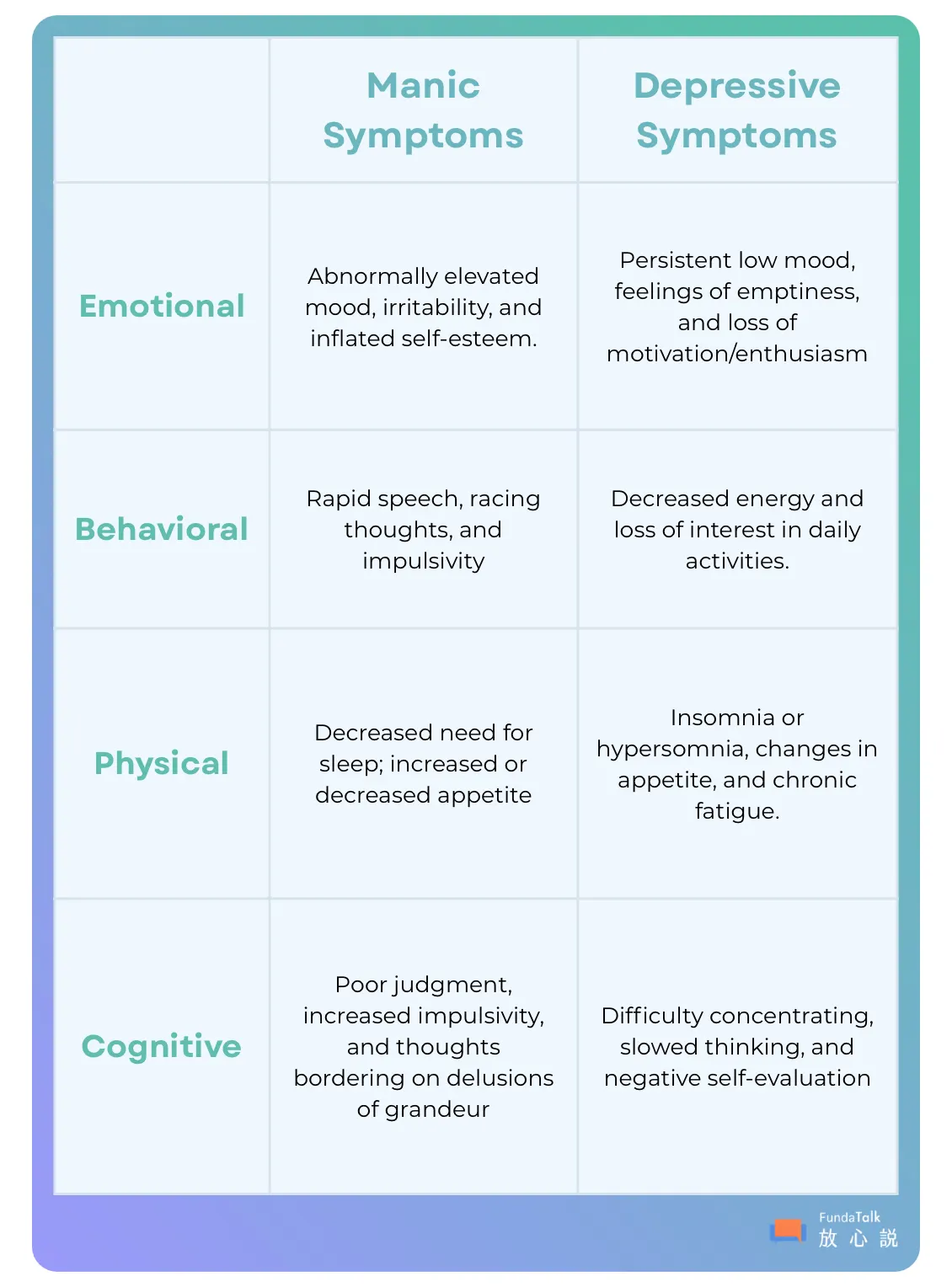
During bipolar disorder's manic (or hypomanic) episodes, changes typically appear in emotions, behavior, physiology, and cognition:
Manic Episode Symptom Characteristics (or Hypomanic)
Bipolar disorder manic episodes may manifest the following behaviors:
Emotions: Patients may appear abnormally excited, overly confident wanting to do great things, elevated mood or easily irritated, even unrealistic optimism and inflated self-image.
Behavior: In behavioral manifestations, manic episode patients speak rapidly, thoughts jump around, often simultaneously pursuing multiple projects, and may engage in high-risk behaviors such as impulse shopping (continuously buying things unable to stop), large investments, frequent socializing, sexual impulses.
Physiology: Most common is drastically reduced sleep need—even sleeping only 3-4 hours can maintain high-intensity activities. At this time, energy seems abundant, sometimes accompanied by increased or decreased appetite.
Cognitive Risks: Decreased judgment, increased impulsive behavior, even grandiose self-concepts or delusional thinking patterns may appear. In this state, patients may make decisions they normally wouldn't choose.
Depressive Episode Symptom Characteristics
Emotions: Patient emotions often show persistent low mood, possibly feeling sad, empty, or losing motivation and enthusiasm for originally interesting activities.
Cognition: Patients may experience poor concentration, slow thinking, decreased memory, even feeling worthless, accompanied by intense self-blame or guilt. These negative thoughts sometimes intensify low mood, forming vicious cycles.
Physiology: Common symptoms include sleep disorders (such as insomnia or excessive sleeping), appetite changes, weight fluctuations, and chronic fatigue. Physical responses may also accompany gastrointestinal discomfort, headaches, muscle tension, etc.
Suicide Risk: Most concerning is suicide risk. If patients have suicidal thoughts, statements, or even concrete plans, immediately seek professional help to avoid danger.
Bipolar Disorder Related Cases
Bipolar I Disorder Related Case Example
A-zhe is a 32-year-old office worker, normally steady in personality with good work performance. However, within weeks after a certain promotion, his emotions and behavior began showing drastic changes.
Initially, A-zhe became abnormally excited, not sleeping for several consecutive nights without feeling tired, his mind filled with grand plans, often believing he had special missions, even claiming he would become an international leader. He frequently interrupted meetings at the company, made inappropriate remarks, and proactively promised clients unachievable cooperation cases—these actions shocked company colleagues and supervisors.
His family also noticed his rapid, incoherent speech, sometimes suddenly angry, or overly confidently stating he'd comprehended universal truths. Soon after, he lost judgment, began wildly shopping with credit cards, and invested years of savings into unclear businesses. He didn't think he was sick, even refusing family concern.
After A-zhe once rushed into the road challenging fate in dangerous behavior, family urgently sent him to the hospital. After psychiatric evaluation, A-zhe was diagnosed with Bipolar I Disorder (BD-I) in manic episode state. Because symptoms were severe, already obviously affecting social and workplace function with dangerous behaviors, hospitalization treatment was needed.
Bipolar II Disorder Related Case Example
Xiaohua is a 23-year-old graduate student, normally outstanding performance, lively and outgoing, but in the past six months, friends and family noticed his behavior began showing drastic changes.
During one period, Xiaohua's mood was elevated, speaking incessantly, even for three consecutive days sleeping only 2-3 hours yet still energetic. He simultaneously registered for four club activities, actively organizing campus concerts, also planning entrepreneurship, even starting to invest large amounts in cryptocurrency. Friends reminded him not to be too impulsive, but he felt he understood what he was doing better than anyone.
However, this state lasted less than two weeks. Afterward, Xiaohua suddenly became extremely low, no longer attending classes, also declining all social activities, staying locked in his room all day. He often said he was worthless, disappointing others' expectations, even having thoughts that disappearing would be better, greatly worrying friends.
After family accompanied medical consultation, Xiaohua was diagnosed with Bipolar II Disorder (BD-II). The psychiatrist arranged medication and psychotherapy—currently his condition is gradually stabilizing.
Extended reading: When Family Members Have Mental Symptoms, What Should You Do? When to Take Them to Mental Health Services? | Family Self-Help Guide + Mental Health Resource Map
Bipolar Disorder Simple Self-Assessment Checklist
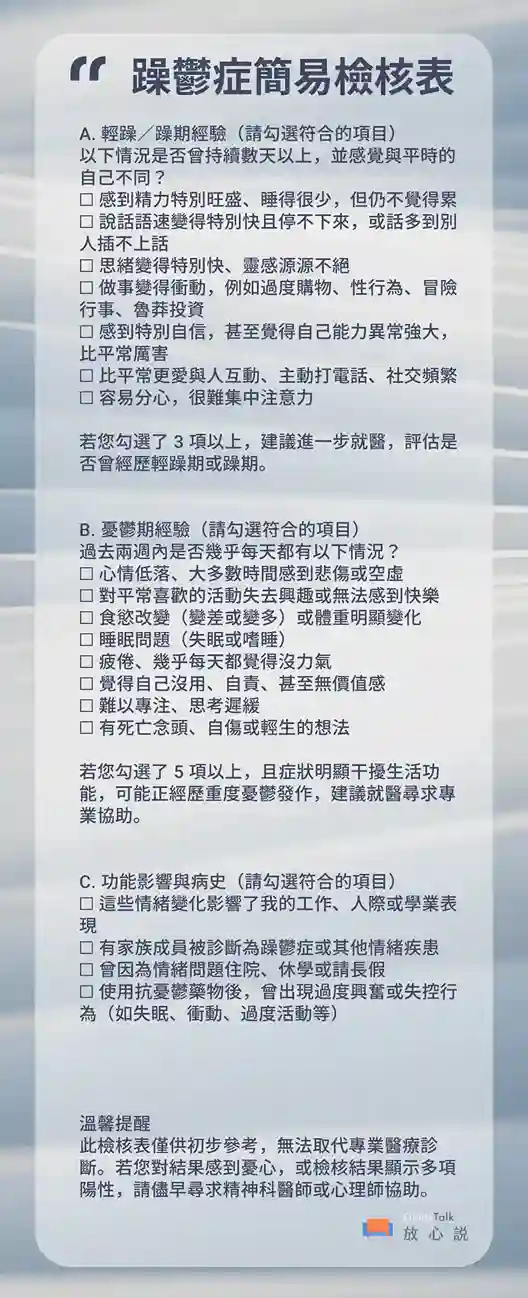
Warm reminder: This checklist is for preliminary reference only and cannot replace professional medical diagnosis. If you meet multiple items or have concerns about results, further consultation with psychiatrists or psychologists is recommended.
When Should You Seek Medical Care?
When emotions or behaviors already affect daily life—such as work, interpersonal, or family functions—professional help should be sought. If having suicidal or harmful thoughts toward others, medical attention is needed immediately. If low mood persists over two weeks, or depression treatment is ineffective with manic symptoms appearing, it may be bipolar disorder—early medical consultation recommended.
Bipolar Disorder Treatment Methods
Bipolar disorder is a controllable disease. Treatment mostly uses medication and psychotherapy in parallel. Different approaches may lead to different results—individualized treatment must be formulated under psychiatric psychiatrist evaluation. Below are several treatment methods for readers' reference:
Medication Treatment
Medications for treating bipolar disorder primarily include lithium salts, antiepileptic drugs, atypical antipsychotic drugs, etc., requiring psychiatrists to comprehensively evaluate individual conditions and prescribe most appropriate prescriptions.
Must note that antidepressants may induce manic episodes and worsen overall disease course—must be used cautiously and short-term.
Psychotherapy and Non-Medication Treatment
In treating bipolar disorder, besides medication, psychosocial intervention and physical treatment play indispensable roles.
When patients are in manic episodes, often lacking illness insight and rational thinking ability, psychotherapy's role during this period is relatively limited. Depressive episodes and maintenance treatment periods are psychotherapy's key work stages.
Cognitive Behavioral Therapy (CBT)
Focuses on correcting patients' negative automatic thoughts common during depressive periods, helping reconstruct more neutral or positive beliefs while enhancing problem-solving abilities and stress adjustment skills.
This therapy is particularly effective for depressive periods—not only helping improve emotions but also helping reduce relapse risk and improve daily functioning.
Repetitive Transcranial Magnetic Stimulation (rTMS)
For those unable to obtain sufficient efficacy from medication or unable to tolerate side effects, rTMS provides non-invasive neuromodulation medical technology. This therapy primarily targets "depressive episodes," helping improve mood and motivation disorders.
Research shows rTMS has significant efficacy for bipolar disorder depressive episodes. Although not all patients reach remission, obvious improvement occurs without serious adverse reactions—low risk of inducing manic episodes. [5]
However, rTMS indeed has about 3% probability of inducing mania—patients must be regularly taking mood stabilizing medications before considering rTMS.
Electroconvulsive Therapy (ECT)
When patients are in acute severe depression or manic episodes, accompanied by suicide risk, psychotic symptoms, or severely deteriorated function, electroconvulsive therapy (ECT) may be a rapid and effective treatment option. ECT can quickly relieve mood symptoms—one of few therapies with clear benefits for treatment-resistant bipolar disorder.
Light Therapy (tPBM)
Primarily applied to bipolar disorder patients with seasonal affective disorder or sleep rhythm disruption. Through daily exposure to high-intensity artificial light sources, this therapy helps regulate biological clock, improving mood and sleep quality.
Overall, bipolar disorder treatment must balance medication and non-medication strategies, flexibly adjusting intervention methods based on different disease periods (manic, depressive, or stable) and individual needs to relieve symptoms while enhancing overall quality of life and reducing relapse risk.
Recommended Medical Institutions
Medical Center Psychiatry Departments
Northern Taiwan:
National Taiwan University Hospital Department of Psychiatry: Has complete diagnostic and research systems.
Taipei Veterans General Hospital Department of Psychiatry: Has acute and chronic care resources, with dedicated teams and adolescent psychiatric evaluation clinics.
Central Taiwan:
China Medical University Hospital Department of Psychiatry: Covers outpatient, inpatient, day hospital, and community support, also providing psychotherapy services.
Taichung Veterans General Hospital Psychiatry Department: Provides complete specialized treatment for schizophrenia, bipolar disorder, etc., with cross-professional collaboration teams.
Southern Taiwan:
National Cheng Kung University Hospital Psychiatry Department: Specializes in adult and adolescent mood disorder treatment with complete systems.
Kaohsiung Chang Gung Memorial Hospital Psychiatry Department: Has mind-body integrated care team, excels at bipolar disorder treatment with abundant clinical research resources.
Mental Health Clinics
Blossom Clinic of Psychosomatic Medicine: Provides complete assessment and diverse treatments. Testing items include autonomic nervous system HRV testing, sleep testing, EEG analysis. Treatment methods cover transcranial magnetic stimulation rTMS, psychological counseling, biofeedback training, mindfulness courses, art therapy, and CES non-medication brain stimulation treatments.
Conclusion
Bipolar disorder can be effectively controlled through medication and psychotherapy—most patients can gradually return to normal life. Early detection and treatment are key. Understanding and support from family and community are equally important. If suspecting yourself or loved ones have related symptoms, seeking professional medical help is the most effective method to help patients.
Important Reminder
Information provided in this article is for educational reference only and cannot replace professional medical diagnosis or treatment advice. If you have related symptoms or concerns, please consult qualified psychiatrists or mental health professionals.
Extended reading: When Family Members Have Mental Illness, What Should You Do? When to Take Them to Mental Health Services? | Family Self-Help Guide + Mental Health Resource Map
Author: Dr. Ching-Lun Hung

Treatment Areas:
Depression, bipolar disorder, post-traumatic stress disorder, anorexia/bulimia/binge eating disorder, addiction disorders
👉 I want to learn about online mental health consultation with Dr. Ching-Lun Hung
References
- Jain, A., & Mitra, P. (2023, February 20). Bipolar disorder. In StatPearls. StatPearls Publishing. National Library of Medicine. https://www.ncbi.nlm.nih.gov/books/NBK558998/
- Yang, Y.-H., Yeh, E.-K., & Hwu, H.-G. (2012). Prevalences of schizophrenia, bipolar disorder, and depressive disorders in community between Taiwan and other countries. Taiwanese Journal of Psychiatry (Taipei), 26(2), 77–88. sop.org.tw
- Hirschfeld, R. M. A., Williams, J. B. W., Spitzer, R. L., Calabrese, J. R., Flynn, L., Keck, P. E., Lewis, L., McElroy, S. L., Post, R. M., Rapport, D. J., & Russell, J. M. (2000). Development and validation of a screening instrument for bipolar spectrum disorder: The Mood Disorder Questionnaire. American Journal of Psychiatry, 157(11), 1873–1875. https://doi.org/10.1176/appi.ajp.157.11.1873
- Reinares, M., Bonnín, C. M., Hidalgo-Mazzei, D., Sánchez-Moreno, J., Colom, F., & Vieta, E. (2016). The role of family interventions in bipolar disorder: A systematic review. Clinical Psychology Review, 43, 47–57. https://doi.org/10.1016/j.cpr.2015.11.010
- Tee, M. M. K., & Au, C. H. (2020). A Systematic Review and Meta‑Analysis of Randomized Sham‑Controlled Trials of Repetitive Transcranial Magnetic Stimulation for Bipolar Disorder. Psychiatric Quarterly, 91, 1225–1247.
More Articles
 )
) )
) )
)