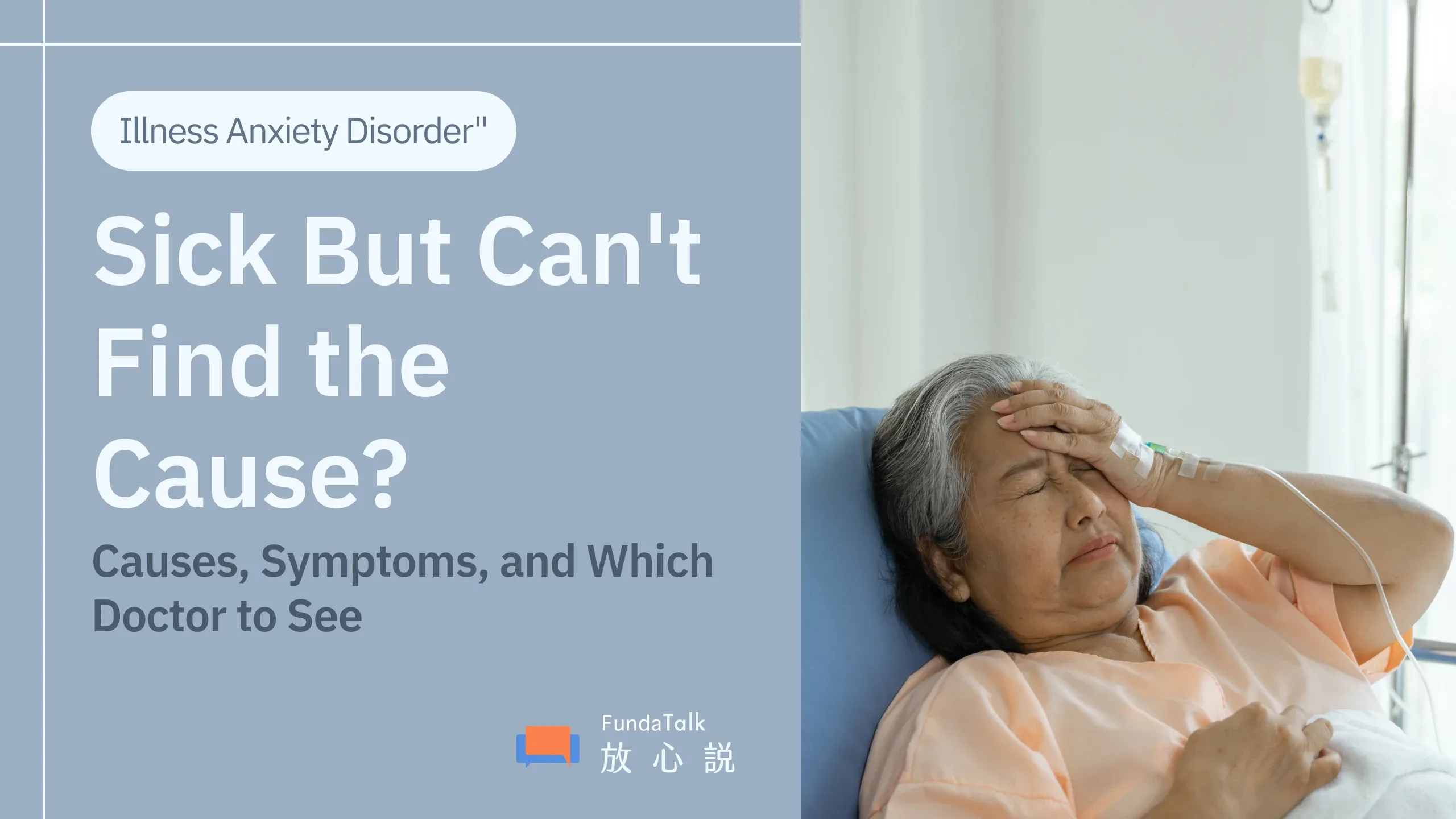
Always Worried About Being Sick? Understanding Illness Anxiety Disorder (Health Anxiety): Symptoms, Causes, and Self-Test


Introduction
You go to the hospital, tests come back normal, but you still feel something's wrong.
A headache makes you worry you have a serious illness; seeing a test report gives you peace of mind for less than two days before other symptoms make you anxious enough to lose sleep.
These could be signs of illness anxiety disorder, also known as health anxiety.
This article will help you understand:
- What is illness anxiety disorder?
- Why does illness anxiety disorder occur?
- Symptoms of illness anxiety disorder
- How to deal with Illness Anxiety Disorder (Health Anxiety)?
- Simple self-assessment for illness anxiety disorder

What Is Illness Anxiety Disorder (Health Anxiety)?
Illness Anxiety Disorder (formerly called Hypochondriasis or Hypochondria) is a chronic psychological condition, one of the severe manifestations of anxiety disorders.
By definition, someone with this condition experiences a persistent preoccupation with health, even when medical tests come back normal.
People with this condition often find themselves repeatedly revisiting fears that something serious was missed, and may develop patterns of frequent doctor visits and medical testing in search of reassurance.
What Causes Illness Anxiety Disorder (Health Anxiety)?
It mostly forms through accumulated long-term experiences and thought patterns, not triggered by a single event. Some individuals experienced serious illness or trauma during their growth, or witnessed important people in their lives become seriously ill, causing physical discomfort and danger prediction mechanisms to become highly linked psychologically.
Against this background, when the body shows minor changes, the brain enters high alert. Combined with intense anxiety and repeated checking, this forms an anxiety cycle difficult to self-relieve [1].
What Are Typical Symptoms of Illness Anxiety Disorder (Health Anxiety)?
If you or someone around you frequently feels uneasy about health issues, this may be a manifestation of illness anxiety disorder. Below are clinically common situations:
1. Frequent Medical Visits and Reassurance-Seeking
Even knowing that hospital visits take time and money, any unusual bodily sensation prompts a need to confirm. When test results come back normal, the reassurance fades quickly, leading to another visit, another doctor, another test. This pattern is sometimes called doctor shopping, where a person moves from one physician to the next in search of certainty that never quite arrives.
2. Particularly Sensitive to Bodily Changes
Individuals with this condition spend a lot of time paying attention to their physical condition.
Things like burping, passing gas, or sneezing (small matters most people don't really care about) immediately cause nervousness, with thoughts like "Am I sick again?" [1].
It's worth noting that these sensations, whether headaches, dizziness, stomach discomfort, chest tightness, or muscle soreness, are real. They are not imagined.
Many people with illness anxiety also report feeling persistently tired or generally unwell even when blood tests and other results come back completely normal. The discomfort is genuine; what differs is the relationship between these sensations and actual physical disease. [2].
3. Hard to Believe They're Really Fine
What's most unsettling are repeatedly surfacing thoughts: what if the judgment was wrong. Many people experiencing it feel health threats particularly intensely, worried that one oversight will bring unbearable consequences [1].
4. Impact on Interpersonal Relationships
When someone puts most attention on health, time accompanying family and friends relatively decreases.
Meanwhile, to help relatives and friends understand their situation, patients may mention more often where they feel uncomfortable, but this may instead leave others not knowing how to respond, making relationships somewhat tense.
Note: If this condition isn't identified and treated promptly, it may gradually lead to unnecessary tests or medical intervention, with risk of over-treatment. Therefore, seeking early professional evaluation and assistance can prevent problems from continuing to expand.
How to deal with Illness Anxiety Disorder (Health Anxiety)?
A psychiatrist can help you understand the connection between your physical symptoms and anxiety, gradually reduce the cycle of reassurance-seeking, and rebuild a sense of trust in your body.
If you think health anxiety may be ruining your life, talking to a professional is a good first step.
Do I Have Illness Anxiety Disorder (Health Anxiety)? Simple Self-Assessment Scale
Instructions
The following questions come from the Whiteley Index (WI-7) scale, used to help you understand your degree of worry about physical health [3].
Questions
Please answer according to your actual feelings over the past month or two:
- Do you frequently worry you might have a serious illness?
- Do you spend a lot of effort paying attention to your health condition?
- When seeking medical care, have you ever felt that the doctor didn't fully understand or take your symptoms seriously?
- Have you ever doubted that a doctor's examination wasn't thorough enough?
- Have you ever worried that a doctor wasn't telling you the full truth about your condition?
- Have you ever felt that you weren't receiving the right treatment?
- Even after tests or explanations, do you still feel that some important information about your condition was overlooked?
Scoring Method
Answer "yes" scores 1 point, "no" scores 0 points. Total score range: 0–7 points
- 0–2 points: Current health concern is at a general level, won't significantly affect life.
- 3–4 points: Health concern is starting to increase, may affect emotions and life, or repeated medical visits and confirmation may appear.
- 5 points and above: Worry about physical health is relatively high, may cause persistent trouble; considering seeking psychiatric or psychological professional assistance is recommended.
Friendly Reminder: This scale is only a reference tool; formal diagnosis still requires evaluation by professional psychologists or Psychiatrists.
Author: Dr. Jou Cheng-Ruey

Treatment Areas:
Sleep disorders, depression, bipolar disorder (manic depression), obsessive-compulsive disorder, elderly populations
👉 I want to learn about online consultation with Dr. Jou Cheng-Ruey
References
- Kikas, K., Werner-Seidler, A., Upton, E., & Newby, J. (2024). Illness Anxiety Disorder: A Review of the Current Research and Future Directions. Current Psychiatry Reports, 26, 331–339. https://doi.org/10.1007/s11920-024-01507-2
- Gelenberg, A. J. (2000). Psychiatric and somatic markers of anxiety: Identification and pharmacologic treatment. The Primary Care Companion to the Journal of Clinical Psychiatry, 2(2), 49–54.
- Duholm, C. S., Højgaard, D. R. M. A., Ørnbøl, E., Wellnitz, K. B., Thomsen, P. H., Rimvall, M. K., & Rask, C. U. (2024). Can the Whiteley Index be used to assess health anxiety in adolescents from the general population? Journal of Psychosomatic Research, 187, 111946 https://doi.org/10.1016/j.jpsychores.2024.111946
More Articles
 )
) )
) )
)