Brain Fatigue Symptoms: Causes, Self-Test & How to Recover


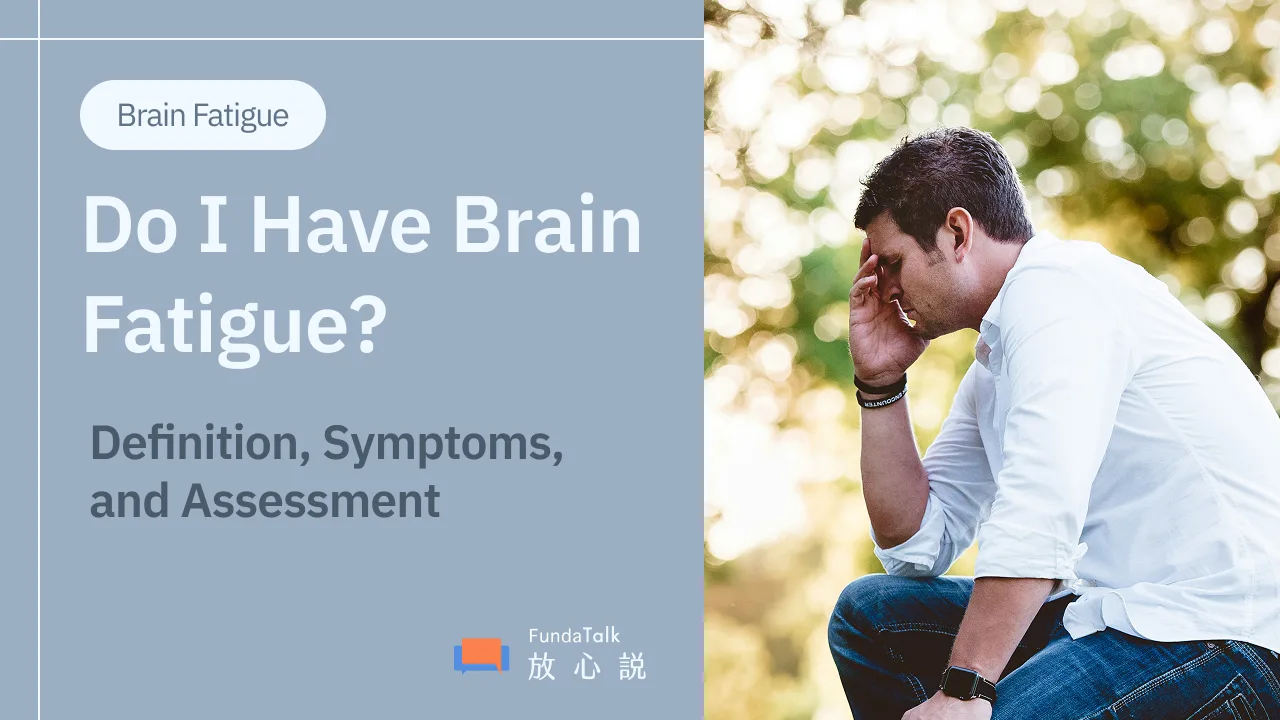
What Is Brain Fatigue?
Brain fatigue refers to the brain being in a high-load operational state for an extended period, typically persisting for six months or more, leading to decreased cognitive and emotional regulation abilities. It is also commonly called mental fatigue or cognitive fatigue.
Common manifestations include decreased concentration, slower thinking speed, emotional instability, and memory decline. If not adjusted in time, it may affect work efficiency and daily quality of life.
What Causes Brain Fatigue?
Brain fatigue is primarily caused by prolonged cognitive activity — but research points to several contributing factors:
1. High-pressure occupations, long working hours, and sustained job strain are among the most well-documented environmental causes.
2. Insufficient or poor-quality sleep prevents the brain from recovering between demanding periods, accelerating the onset of fatigue.
3. Extended periods of demanding cognitive activity deplete the brain's capacity to regulate effort and performance, particularly when rest intervals are inadequate.
4. In some individuals, brain fatigue also arises in the context of medical conditions — neurological disorders including stroke, multiple sclerosis, and Parkinson's disease are associated with higher rates of mental fatigue, as are post-viral conditions such as Long COVID.
Common Symptoms of Brain Fatigue
Common brain fatigue symptoms can include poor concentration, slower thinking, memory problems, irritability, sensory sensitivity, and feeling mentally drained even after rest.
The signs of brain fatigue extend across five main dimensions, and often go unrecognized until they begin disrupting daily function:
- Cognitive Level: Decreased concentration, slower thinking, memory decline, or easy distraction when processing information.
- Emotional Level: Easy irritability, greater emotional fluctuation, or increased sensitivity to stress.
- Sensory Level: Particular sensitivity to light or noise, easily feeling uncomfortable.
- Sleep Level: May experience difficulty falling asleep, shorter sleep duration, or conversely, sleeping too much.
- Mental Recovery Level: Even after rest, still feeling insufficient mental capacity. Some people also notice regular changes in mental state throughout the day, such as being particularly fatigued in the morning or evening.
Overall, brain fatigue is a state where psychological and physiological factors interact. Different individuals manifest differently, but the common characteristic is excessive brain energy consumption and decreased recovery efficiency [1].
Do I Have Brain Fatigue? Brain Fatigue Self-Test
Through the following questionnaire, you can preliminarily understand whether you're showing signs of brain fatigue.
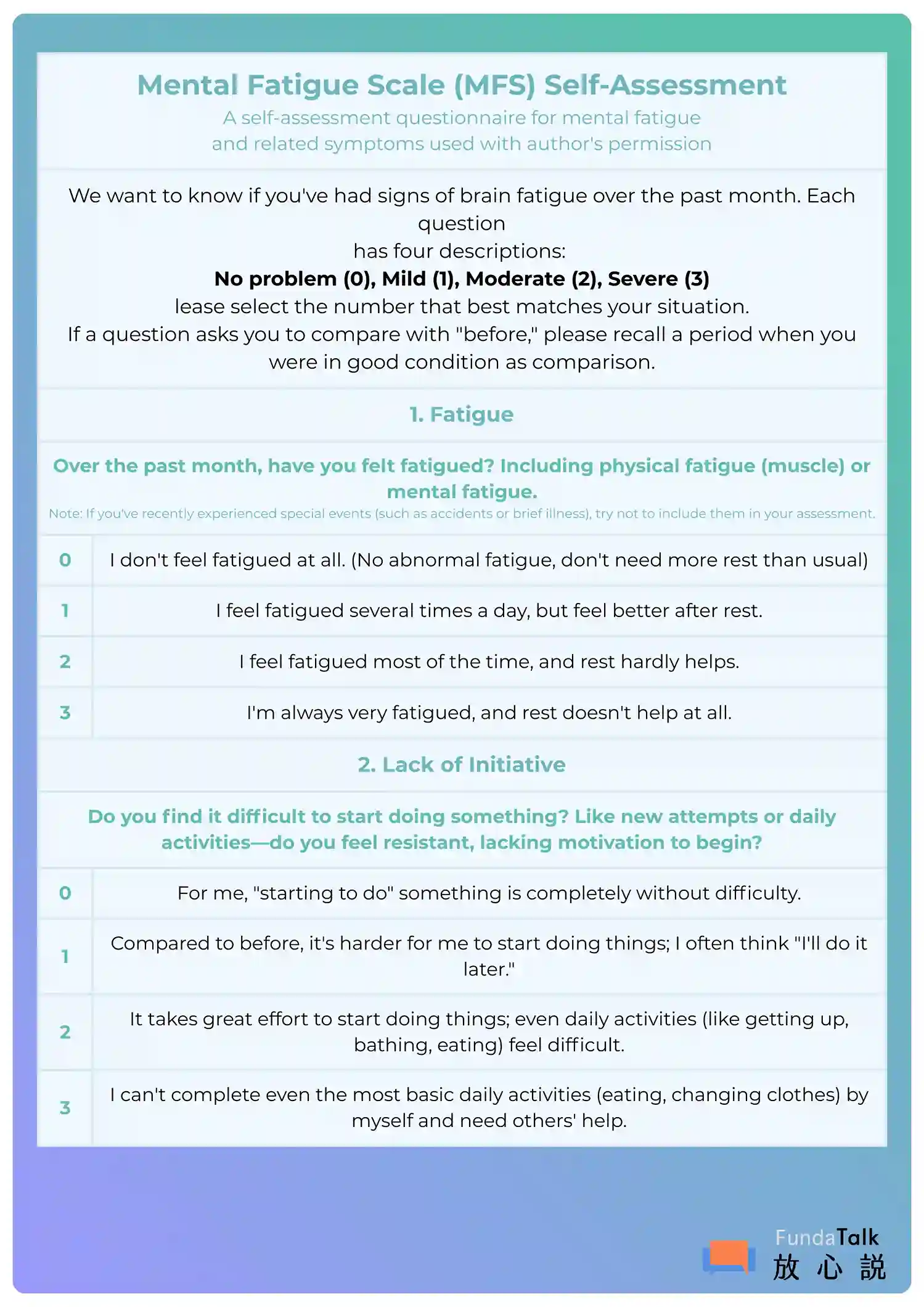
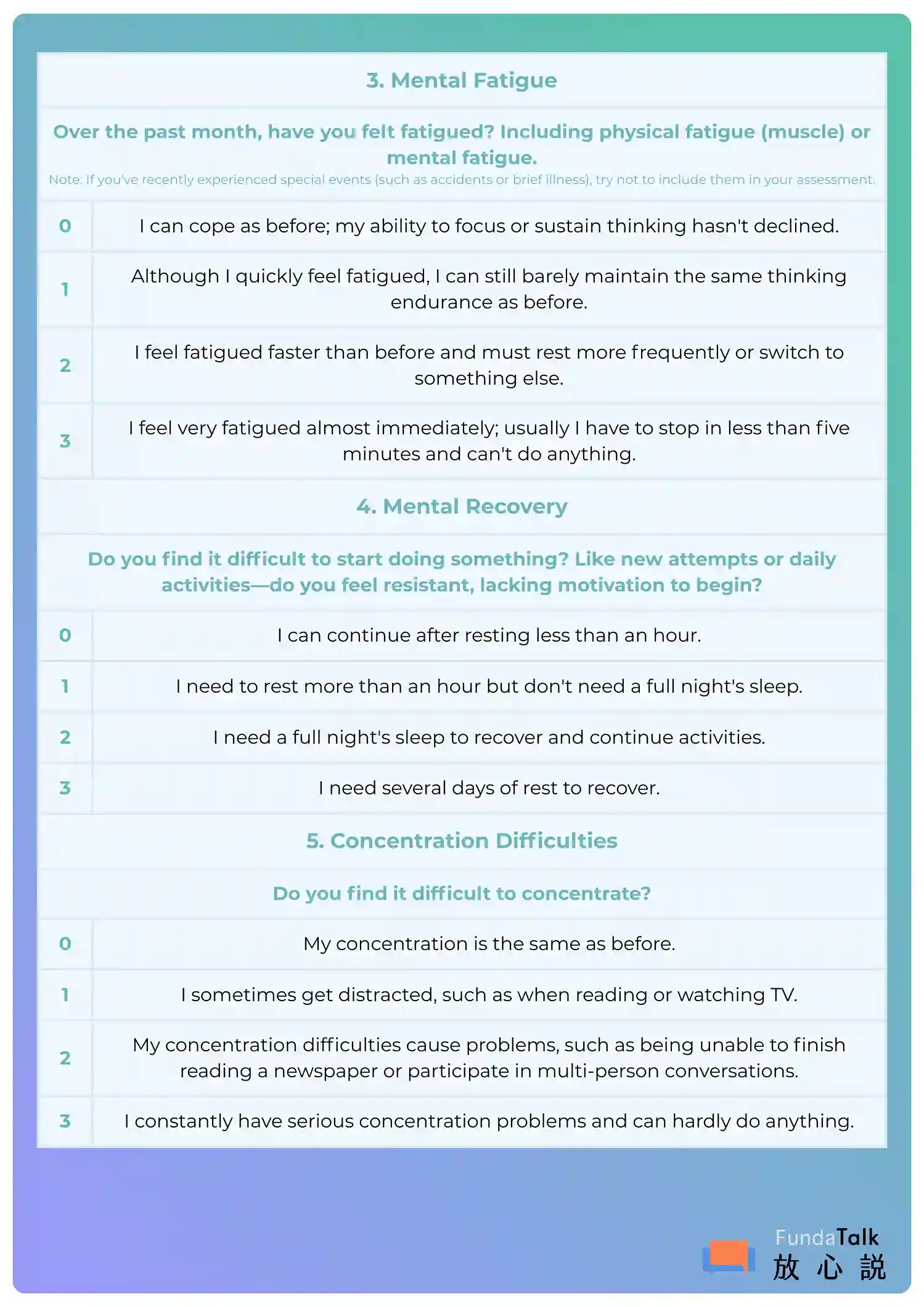
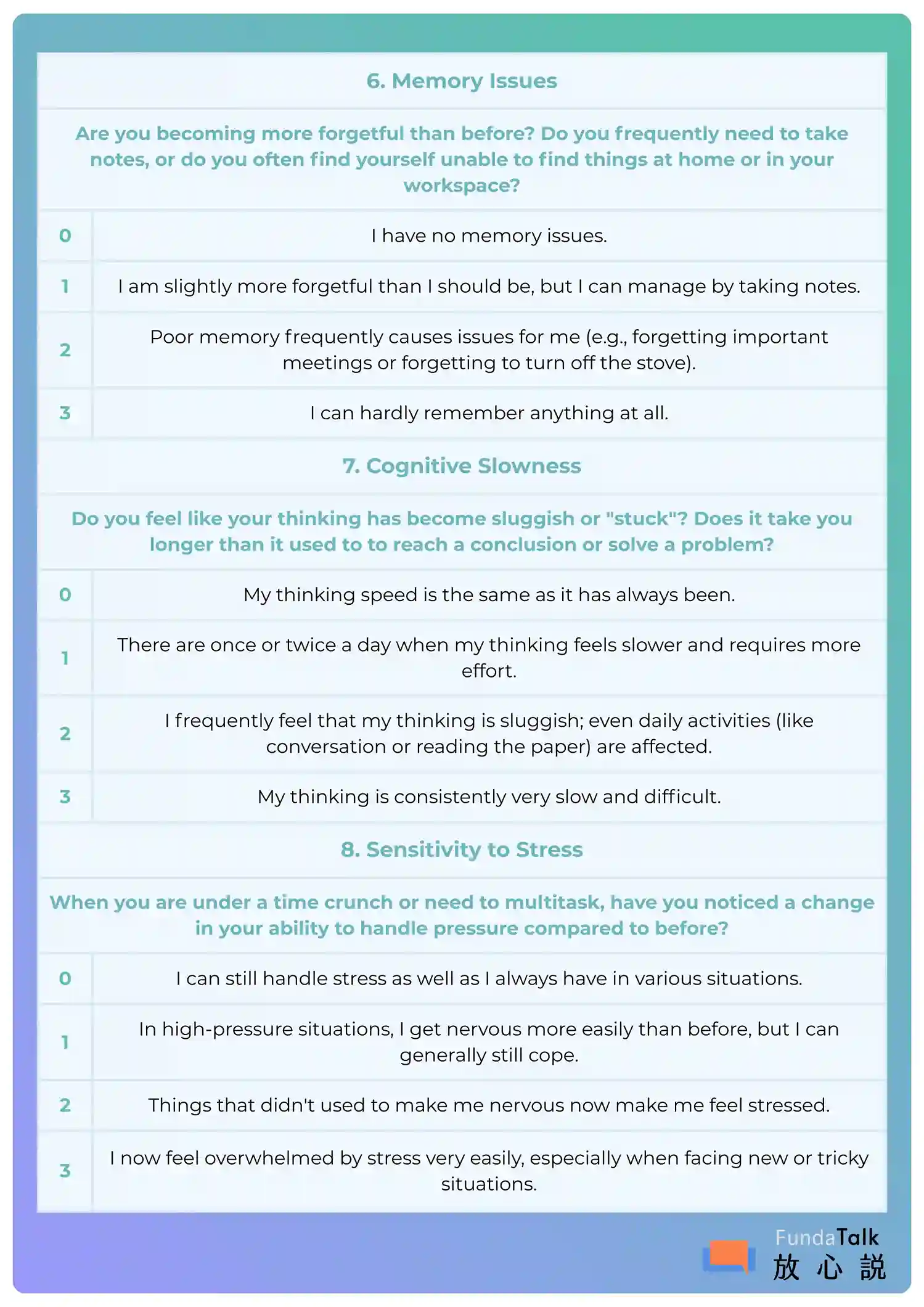
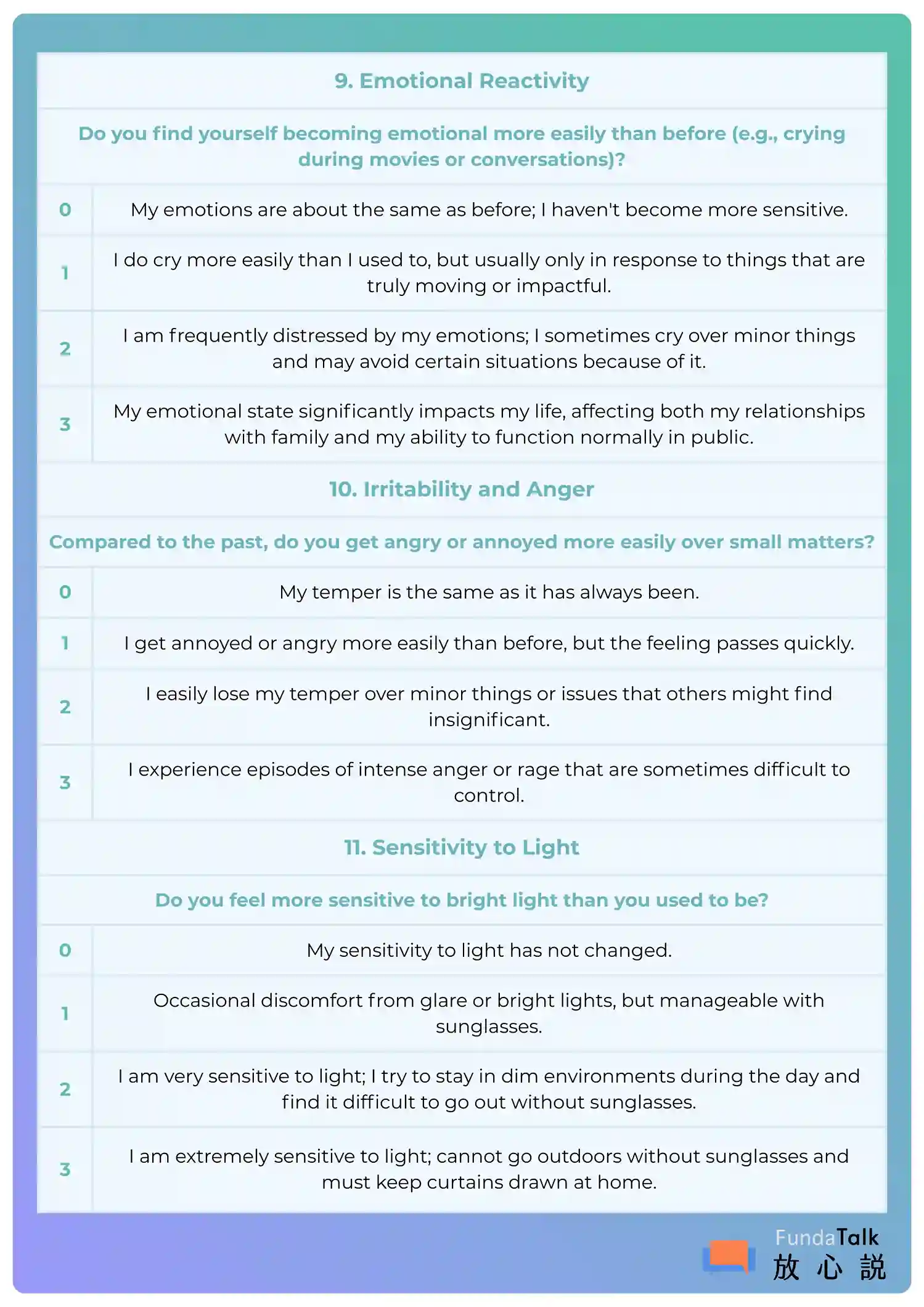
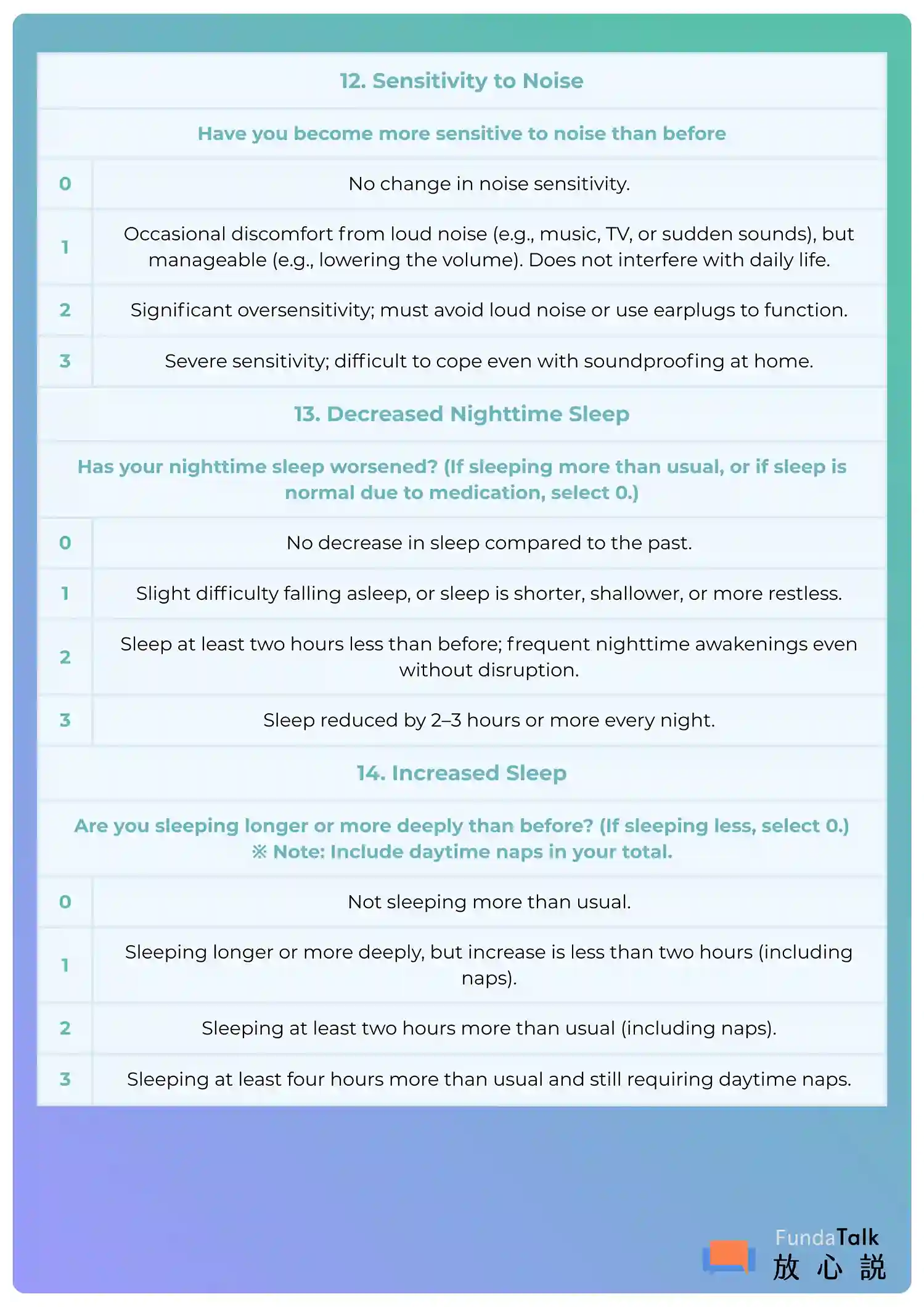
Brain Fatigue Index Interpretation:
When the MFS total score exceeds 10 points, it indicates higher risk of brain fatigue. Further evaluation and discussion with professionals is recommended.
Source: This scale is translated from "A self-assessment questionnaire for mental fatigue and related symptoms," used with author's permission.
If you'd like to speak with a professional Psychiatrist, you can schedule an online mental health consultation here.
Further Reading
What Is Brain Fog? Symptoms, Causes, and How to Get Assessed
- When a Family Member Has a Mental Health Condition: When to Seek Help and What to Do Next | Caregiver's Guide + Mental Health Resources
Reference
Johansson, B., Starmark, A., Berglund, P., Rödholm, M., & Rönnbäck, L. (2010). A self-assessment questionnaire for mental fatigue and related symptoms after neurological disorders and injuries. Brain Injury, 24(1), 2–12. https://pubmed.ncbi.nlm.nih.gov/20001478/
More Articles
 )
) )
) )
)