Anxiety in Men: Symptoms, Anger, Causes & How to Cope

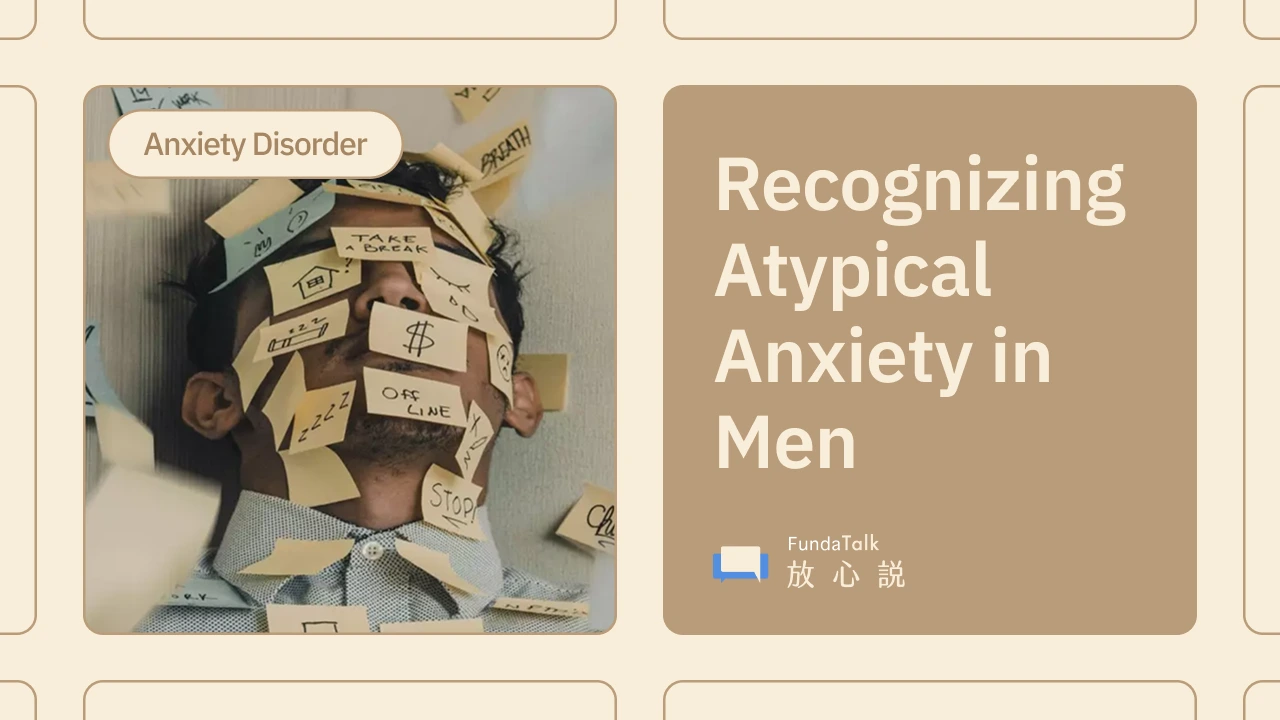
In clinical experience, we observe that men and women express anxiety in vastly different ways. Women more commonly regulate anxiety through emotional internalization—for example, repeatedly asking themselves “Did I do something wrong?”—or proactively confiding in family and friends.
Men, conversely, tend to hide their emotions, having been taught from childhood to “hold it together” and “don’t trouble others,” with fewer opportunities to practice articulating their feelings.
As a result, when stress escalates, men’s emotions often emerge differently—sudden outbursts of anger, prolonged silence, or simply avoidance by burying themselves in work, exercise, or even alcohol.
Behind these behaviors isn’t a bad temper but rather stress with no outlet.
This article uses clinical observations to help you recognize emotions that appear to be bad temper but actually stem from unacknowledged anxiety, helping you see the true stress sources behind them.

1. What Are Atypical Symptoms of Anxiety in Men?
Epidemiological research shows that women are diagnosed with generalized anxiety disorder at twice the rate of men. However, this doesn’t mean men experience less anxiety—rather, men are more likely to suppress or mask anxiety symptoms, making them harder to detect and even leading to misdiagnosis.
From a physiological perspective, when experiencing anxiety, the amygdala (the brain region processing fear) becomes overactive while the prefrontal cortex governing cognitive functions is suppressed. At this point, the sympathetic nervous system’s “fight or flight” response activates, causing rapid heartbeat, rapid breathing, and other autonomic nervous system dysregulation symptoms. Long-term, this emotional stress severely damages physical and mental health.

However, male anxiety symptoms are frequently misunderstood as other issues, such as bad temper or excessive work stress. Male anxiety often centers on an internal feeling of being “out of control” and “trapped.” Specific manifestations appear in four dimensions:
Emotional Expression: Men tend to substitute anger or irritability for fear or worry because anger is socially perceived as more consistent with “masculinity.” Additionally, they habitually suppress emotions to avoid appearing vulnerable.
Physical Responses: Physical symptoms caused by anxiety include muscle tension (especially neck and shoulders), gastrointestinal discomfort (such as diarrhea or irritable bowel syndrome), and sexual dysfunction (such as decreased libido or erectile dysfunction).
Behavioral Manifestations: Behaviorally, they may avoid social situations or challenging tasks, or escape emotions through risk-taking behaviors (such as alcoholism, drug use, gambling) and overworking.
Psychological State: Long-term anxiety can also cause difficulty concentrating and self-criticism. These signs are often misunderstood as bad temper or excessive work stress, masking the real anxiety problem.
These symptoms not only affect individuals but also create stress and misunderstanding in interpersonal relationships.
2. What Causes Anxiety in Men?
The causes of male anxiety are complex, mainly divided into two categories: sociocultural and individual factors.
Influence of Sociocultural Factors
Society’s gender role expectations clearly deepen male anxiety. Superheroes in movies and the omnipotent James Bond have shaped stereotypical male images of being impervious to pain and fear, making men feel inadequate when experiencing emotional distress. Seeking help is stigmatized as being a “weakling,” causing men to avoid actively seeking psychological support, deepening the burden of emotional stress.
Meanwhile, men also bear multiple life pressures: career development, financial responsibility, family relationships, etc. Especially when encountering career bottlenecks, financial difficulties, or health crises (such as male menopause), these pressures may explode instantly, further deteriorating male mental health.
Individual Factors and Mental Health Issues
On the other hand, childhood traumatic experiences (such as neglect or abuse) or familial genetic factors also increase the likelihood of men developing anxiety symptoms. Additionally, anxiety disorders often coexist with depression or addiction problems, forming vicious cycles that severely impact mental health.
Most men habitually “tough it out alone,” using problem-focused coping strategies such as working overtime or independently seeking solutions. However, when facing uncontrollable situations—like pandemics, unemployment, or relationship breakdowns—these strategies can actually increase feelings of helplessness and frustration, intensifying anxiety symptoms.
3. How Can Men Recognize and Manage Anxiety?
To effectively cope with anxious emotions, men must first learn to identify and understand their anxiety state. Below are several practical self-assessment and management methods to help men reduce emotional stress.
Build a Personal “Anxiety Map”
Anxiety feelings are abstract and vague; building an anxiety map helps concretize emotions. When anxiety emerges, try creating an “anxiety map” to help you more clearly recognize your emotional state. Specific methods include:
Write “current feeling” in the center of the map
Extend branches outward recording:
- Which body part feels tense? (e.g., chest, throat, or shoulders)
- When did this feeling start?
- What factors triggered this feeling?
- What strategies helped relieve similar feelings in the past?

Daily “System Load” Assessment
You can analogize yourself to a computer system and record daily load levels (1-10 points):
- Scattered thoughts (CPU)
- Attention (RAM)
- Task pressure (Hard drive)
- Rest and relaxation (Cooling)
- Emotional stability (System stability)
Through continuous recording, you can detect problems faster and make adjustments.
Smart Devices with Breathing Regulation
Breathing is one of the few autonomic nervous functions we can directly control. Research shows that conscious deep breathing can stimulate the vagus nerve, activate the parasympathetic nervous system, rapidly reduce heart rate and blood pressure, and alleviate anxiety symptoms.
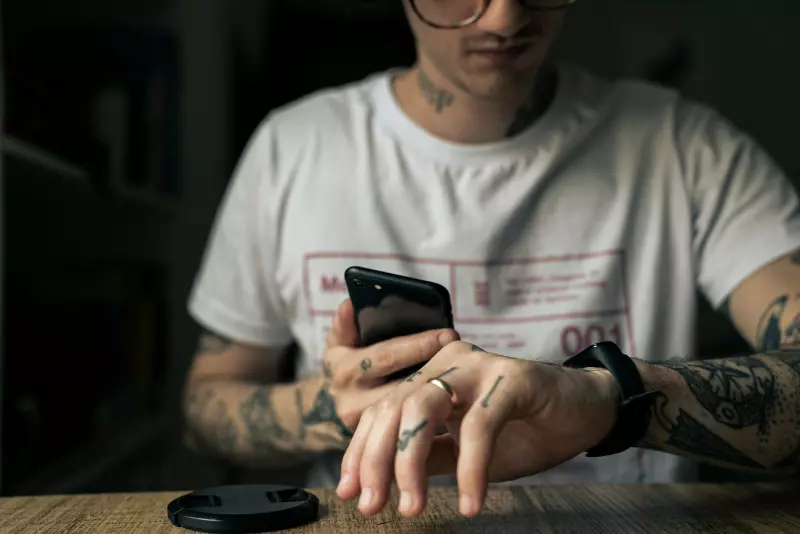
Try using a watch or bracelet that can detect heart rate.
Recommended abdominal breathing method: Inhale for 4 seconds, hold for 4 seconds, exhale for 6-8 seconds, continue for 5-10 minutes.
Seek Professional Help
When self-management methods are insufficient to relieve anxious emotions, timely professional help is especially important for male mental health.
Mental health clinics provide medication treatment that can effectively regulate nervous system function and quickly relieve acute or severe anxiety symptoms. When combined with psychological counseling, effects become more stable and comprehensive. Psychological counseling through cognitive behavioral therapy (CBT) or mindfulness therapy helps men readjust thinking patterns, more deeply understand anxiety sources, and learn effective coping strategies.
With technological advancement, the convenience of online psychological counseling is particularly suitable for busy professionals or men concerned about traditional counseling, offering more flexible professional support.
When Does Anxiety in Men Need Professional Support?
Anxiety is not weakness, not failure, and certainly not being insufficiently “manly.”
In every silent night, perhaps many men lie awake staring at the ceiling, not knowing how to speak up. This article hopes to convey a message: men also deserve gentle understanding and support.
Whether or not you currently face anxiety, you deserve more empathy to care for male friends and family around you.
Provide warm support and accurate information to jointly build a friendlier, more inclusive environment for male mental health.
References
- Seidler, Z. E., Dawes, A. J., Rice, S. M., Oliffe, J. L., & Dhillon, H. M. (2016). The role of masculinity in men’s help-seeking for depression: A systematic review. Clinical Psychology Review, 49, 106–118. https://doi.org/10.1016/j.cpr.2016.09.002
- Craske, M. G. (2003). Origins of phobias and anxiety disorders: Why more women than men? Elsevier.
- Rice, S. M., Purcell, R., & McGorry, P. D. (2018). Adolescent and young adult male mental health: Transforming system failures into proactive models of engagement. Journal of Adolescent Health, 62(3S), S9–S17. https://doi.org/10.1016/j.jadohealth.2017.10.015
- Jorm, A. F., & Wright, A. (2008). Influence of young people’s stigma beliefs on help-seeking intentions and perceptions of helpfulness. The British Journal of Psychiatry, 192(2), 144–149. https://doi.org/10.1192/bjp.bp.107.039404
More Articles
 )
) )
) )
)